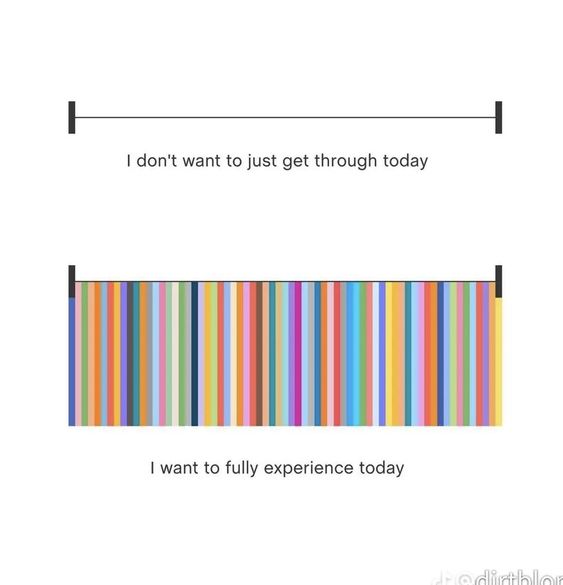
“One of the best secrets of a happy life is the art of extracting comfort and sweetness from every circumstance… People are always looking for happiness at some future time and in some new thing, or some new set of circumstances, in possession of which they some day expect to find themselves. But the fact is, if happiness is not found now, where we are, and as we are, there is little chance of it ever being found. There is a great deal more happiness around us day by day than we have the sense or power to seek and find. If we are to cultivate the art of living, we should cultivate the art of extracting sweetness and comfort out of everything, as the bee goes from flower to flower in search of honey.”
Thomas Mitchell
“The Buddhists believe that our presence can be healing; that by simply sharing space with another person and giving them our full, undivided attention, we can ease their suffering. Sometimes I wonder if the reason we don’t all feel so broken and lonely and insecure is because we rarely give each other our full, undivided attention.”
Cole Schafer
“Meditation is a state of mind which looks at everything with complete attention, totally, not just parts of it. And no one can teach you how to be attentive. If any system teaches you how to be attentive, then you are attentive to the system and that is not attention. Meditation is one of the greatest arts in life—perhaps the greatest, and one cannot possibly learn it from anybody, that is the beauty of it. It has no technique and therefore no authority.”
J. Krishnamurti, Freedom From The Known (Page 116)
“If your eyes are blinded with your worries, you cannot see the beauty of the sunset.”
J. Krishnamurti, Freedom From The Known (Page 88)
“We are always comparing what we are with what we should be. The should-be is a projection of what we think we ought to be. Contradiction exists when there is comparison, not only with something or somebody, but with what you were yesterday, and hence there is conflict between what has been and what is. There is what is only when there is no comparison at all, and to live with what is, is to be peaceful. Then you can give your whole attention without any distraction to what is within yourself—whether it be despair, ugliness, brutality, fear, anxiety, loneliness—and live with it completely; then there is no contradiction and hence no conflict.”
J. Krishnamurti, Freedom From The Known (Page 63)
“If you can look at [all things] without wanting the experience to be repeated, then there will be no pain, no fear, and therefore tremendous joy.”
J. Krishnamurti, Freedom From The Known (Page 37)
“If you say that you would like a certain man to be your lover, then in many dreams and in many fantasies you have already loved that man. And if it happens, then the real man is going to fall short of your fantasy; he is going to be just a carbon copy, because reality is never as fantastic as fantasy. Then you will be frustrated. But if you start liking that which is happening—if you don’t put your own will against the whole, if you simply say okay—whatever happens, you simply say yes—then you can never be miserable. Because no matter what happens, you are always in a positive attitude, ready to receive it and enjoy it.”
Osho, Everyday Osho (Page 157)

“What makes life worth living? No child asks itself that question. To children life is self-evident. Life goes without saying: whether it is good or bad makes no difference. This is because children don’t see the world, don’t observe the world, don’t contemplate the world, but are so deeply immersed in the world that they don’t distinguish between it and their own selves.”
Karl Ove Knausgard, Autumn
“The reason creativity wilts inside of us like a vase full of snipped wildflowers is the very same reason love fades. Somewhere along the line, we stop noticing. We can never stop noticing. The moment we stop noticing, we might as well be dead. We’re alive and breathing but we feel nothing at all. Creativity and love dies when we feel nothing at all. And so we notice so we we can feel because, in the words of Klinkenborg, noticing means thinking with all your senses.”
Cole Schafer
“Nobody wants to sit with you at dinner while you’re on the phone. This is where we confuse time and energy. You can spend a whole hour with someone, but only give them ten minutes of energy. I’m not able to spend much time with my family, but when I’m with them I’m 100 percent there. I’d rather spend two hours with them, focused and engaged, than give them partial, distracted energy for a whole weekend.”
Jay Shetty, Think Like A Monk (Page 240)

“To my mind, the idea that doing dishes is unpleasant can occur only when you aren’t doing them… If I am incapable of washing dishes joyfully, if I want to finish the quickly so I can go and have dessert or a cup of tea, I will be equally incapable of enjoying my dessert or my tea when I finally have them… Each thought, each action in the sunlight of awareness becomes sacred. In this light, no boundary exists between the sacred and the profane.”
Thich Nhat Hanh, via Think Like A Monk (Page 135)