
“It is such a good opportunity when you have a weak leader above you. Don’t get all downtrodden because your leader doesn’t motivate you. Motivate yourself! Take charge of things. Take advantage of it. Make things happen. It’s awesome to have a weak leader. I love it. I get after it. It give me so much more mobility in my job. If I have a strong leader, obviously, that’s great too. But a weak leader is a no factor. Step up and take advantage of it. Step up and lead.” ~ Jocko Willink, Extreme Ownership (Page 303)
Archives
“While there is no guarantee of success in leadership, there is one thing that is certain: leading people is the most challenging and, therefore, the most gratifying undertaking of all human endeavors.” ~ Jocko Willink, Extreme Ownership (Page 287)
“Leadership decisions are inherently challenging and take practice. Not every decision will be a good one: all leaders make mistakes. No leader, no matter how competent and experienced, is immune from this. For any leader, handling those mistakes with humility is the key. Subordinates or direct reports don’t expect their bosses to be perfect. When the boss makes a mistake but then owns up to that mistake, it doesn’t decrease respect. Instead, it increases respect for that leader, providing he or she possesses the humility to admit and own mistakes and, most important, to learn from them.” ~ Jocko Willink, Extreme Ownership (Page 287)
“There is an answer to the age-old question of whether leaders are born or made. Obviously, some are born with natural leadership qualities, such as charisma, eloquence, sharp wit, a decisive mind, the willingness to accept risk when others might falter, or the ability to remain calm in chaotic, high-pressure situations. Others may not possess these qualities innately. But with a willingness to learn, with a humble attitude that seeks valid constructive criticism in order to improve, with disciplined practice and training, even those with less natural ability can develop into highly effective leaders. Others who were blessed with all the natural talent in the world will fail as leaders if they are not humble enough to own their mistakes, admit that they don’t have it all figured out, seek guidance, learn, and continuously grow.” ~ Jocko Willink, Extreme Ownership (Page 285)
“As with many of the dichotomies of leadership, a person’s biggest strength can be his greatest weakness when he doesn’t know how to balance it. A leader’s best quality might be her aggressiveness, but if she goes too far she becomes reckless. A leader’s best quality might be his confidence, but when he becomes overconfident he doesn’t listen to others.”
Jocko Willink, Extreme Ownership (Page 281)
“A leader must be calm but not robotic. It is normal—and necessary—to show emotion. The team must understand that their leader cares about them and their well-being. But, a leader must control his or her emotions. If not, how can they expect to control anything else? Leaders who lose their temper also lose respect. But, at the same time, to never show any sense of anger, sadness, or frustration would make that leader appear void of any emotion at all—a robot. People do not follow robots.” ~ Jocko Willink, Extreme Ownership (Page 275)
“I learned in SEAL training that if I wanted any extra time to study the academic material we were given, prepare our room and my uniforms for an inspection, or just stretch out aching muscles, I had to make that time because it did not exist on the written schedule. When I check into my first SEAL Team, that practice continued. If I wanted extra time to work on my gear, clean my weapons, study tactics or new technology, I needed to make that time. The only way you could make time, was to get up early. That took discipline.” ~ Jocko Willink, Extreme Ownership (Page 271)
“There is no 100 percent right solution. The picture is never complete. Leaders must be comfortable with this and be able to make decisions promptly, then be ready to adjust those decisions quickly based on evolving situations and new information. Intelligence gathering and research are important, but they must be employed with realistic expectations and must not impede swift decision making that is often the difference between victory and defeat. Waiting for the 100 percent right and certain solution leads to delay, indecision, and an inability to execute. Leaders must be prepared to make an educated guess based on previous experience, knowledge of how the enemy operates, likely outcomes, and whatever intelligence is available in the immediate moment.” ~ Leif Babin, Extreme Ownership (Page 254)
“One of the most important jobs of any leader is to support your own boss—your immediate leadership. In any chain of command, the leadership must always present a united front to the troops. A public display of discontent or disagreement with the chain of command undermines the authority of leaders at all levels. This is catastrophic to the performance of any organization.” ~ Leif Babin, Extreme Ownership (Page 238)




A Navy SEAL’s Checklist for Planning – from Jocko Willink and Leif Babin
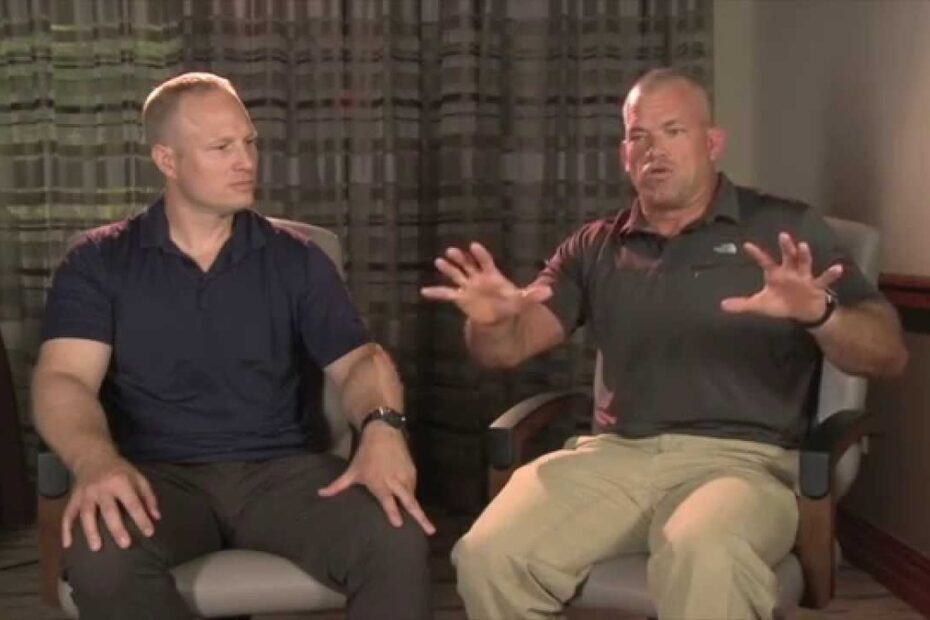
Excerpt: Two Navy SEALs share their checklist for planning which they use for mission preparation… A checklist you can use for life planning too.
Read More »A Navy SEAL’s Checklist for Planning – from Jocko Willink and Leif Babin