
“Love is a state of Being. Your love is not outside; it is deep within you. You can never lose it, and it cannot leave you. It is not dependent on some other body, some external form. In the stillness of your presence, you can feel your own formless and timeless reality as the unmanifested life that animates your physical form. You can then feel the same life deep within every other human and every other creature. You look beyond the veil of form and separation. This is the realization of oneness. This is love.”
Eckhart Tolle, The Power of Now (Page 154)
Archives
“The greatest catalyst for change in a relationship is complete acceptance of your partner as he or she is, without needing to judge or change them in any way. That immediately takes you beyond ego. All mind games and all addictive clinging are then over. There are no victims and no perpetrators anymore, no accuser and accused. This is also the end of all codependency, of being drawn into somebody else’s unconscious pattern and thereby enabling it to continue. You will either separate—in love—or move ever more deeply into the Now together—into Being. Can it be that simple? Yes, it is that simple.”
Eckhart Tolle, The Power of Now (Page 154)
“Every addiction arises from an unconscious refusal to face and move through your own pain. Every addiction starts with pain and ends with pain. Whatever the substance you are addicted to—alcohol, food, legal or illegal drugs, or a person—you are using something or somebody to cover up your pain. That is why, after the initial euphoria has passed, there is so much unhappiness, so much pain in intimate relationships. They do not cause pain and unhappiness. They bring out the pain and unhappiness that is already in you. Every addiction does that. Every addiction reaches a point where it does not work for you anymore, and then you feel the pain more intensely than ever.”
Eckhart Tolle, The Power of Now (Page 152)
“You are ‘in love’ with your partner. This is at first a deeply satisfying state. You feel intensely alive. Your existence has suddenly become meaningful because someone needs you, wants you, and makes you feel special, and you do the same for him or her. When you are together you feel whole. The feeling can become so intense that the rest of the world fades into insignificance. However, you may also have noticed that there is a neediness and a clinging quality to that intensity. You become addicted to the other person. He or she acts on you like a drug. You are on a high when the drug is available, but even the possibility or the thought that he or she might no longer be there for you can lead to jealousy, possessiveness, attempts at manipulation through emotional blackmail, blaming and accusing—fear of loss. If the other person does leave you, this can give rise to the most intense hostility or the most profound grief and despair. In an instant, loving tenderness can turn into a savage attack or dreadful grief. Where is the love now? Can love change into its opposite in an instant? Was it love in the first place, or just an addictive grasping and clinging?”
Eckhart Tolle, The Power of Now (Page 149)
“There is nothing you can ever do or attain that will get you closer to salvation than it is at this moment. This may be hard to grasp for a mind accustomed to thinking that everything worthwhile is in the future. Nor can anything that you ever did or that was done to you in the past prevent you from saying yes to what is and taking your attention deeply into the Now. You cannot do this in the future. You do it now or not at all.”
Eckhart Tolle, The Power of Now (Page 147)
On Juneteenth, Opal Lee, and Breathing Oxygen Into A Movement For Change
“The people of Texas are informed that, in accordance with a proclamation from the Executive of the United States, all slaves are free. This involves an absolute equality of personal rights and rights of property between former masters and slaves, and the connection heretofore existing between them becomes that between employer and hired labor. The freedmen are advised to remain quietly at their present homes and work for wages. They are informed that they will not be allowed to collect at military posts and that they will not be supported in idleness either there or elsewhere.”
General Orders, Number 3; Headquarters District of Texas, Galveston, June 19, 1865
Beyond the Quote (169/365)
When Maj. Gen. Gordon Granger issued the above order, he had no idea that, in establishing the Union Army’s authority over the people of Texas, he was also establishing the basis for a holiday, “Juneteenth” (“June” plus “nineteenth”), today the most popular annual celebration of emancipation from slavery in the United States.
Read More »On Juneteenth, Opal Lee, and Breathing Oxygen Into A Movement For ChangePaul Hogan Poem on Capturing Moments (and Maybe When Not To)
“Camera loaded, the light
near sundown blushes
the grey, beat wood
of the boathouse, flashes
along arcs of the waves.
Don’t photograph this. Don’t render it
immutable now. Let it
distort, let it unravel,
reconstruct itself.
This image will retell
this here and now for years,
without conclusion —
It will never change,
it will always be different,
we will never agree. For now,
let the light slip down
around you. Don’t
remember this yet.”
Paul Hogan, Point of Departures (Page 37)
Beyond the Quote (167/365)
In a world where the camera on our phone takes better pictures than most DSLR cameras from just a few years ago, where 4K quality can be held in the palm of one hand and activated with the push of one thumb, where so much of what we see and hear in the world can be so vividly captured and contained within the confines of a memory chip that’s smaller than a penny and backed up by an imaginary cloud—the line between knowing when to be present in a moment and when to capture a moment can become incredibly blurred. Hell, if we wanted to, we could record every moment we ever wanted to and store it into a neat and tidy timeline of moments that could quite literally make up the story of our lives. Rather than our life “flashing before our eyes” at the end, we could playback our lives in a flash with just a few clicks on a computer screen.
Read More »Paul Hogan Poem on Capturing Moments (and Maybe When Not To)The Egg by Andy Weir — A Profound Short Story About The Meaning Of Life and Death
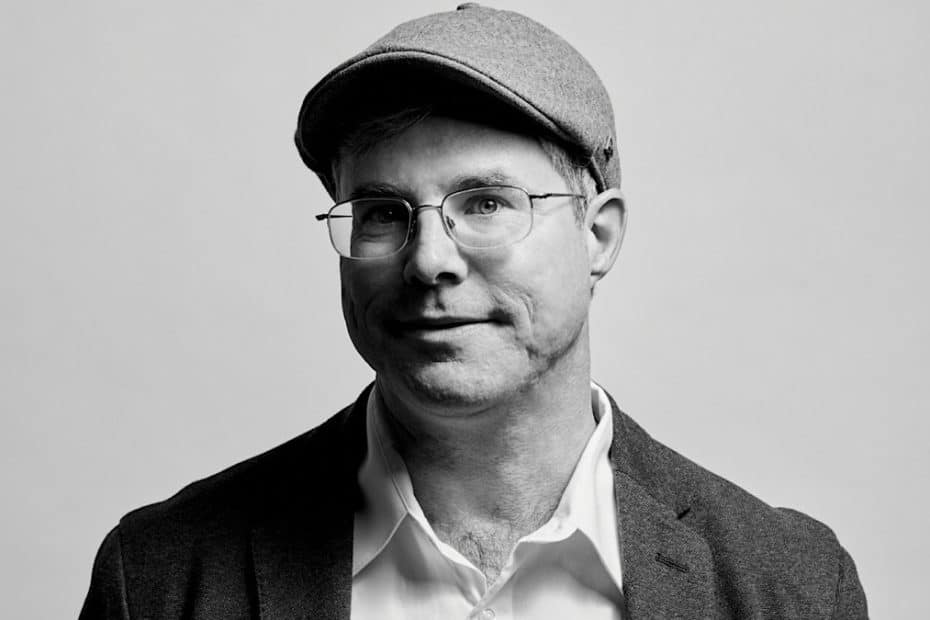
Excerpt: The Egg by Andy Weir is an incredibly profound and thought-provoking short story about interconnectedness, oneness, and the meaning of life and death. A must read for anybody who is curious about why we might be here and what this experience of life might be all about.
Read More »The Egg by Andy Weir — A Profound Short Story About The Meaning Of Life and Death
Jocko Willink Quote on How Your Greatest Strength Can Also Be Your Greatest Weakness
“As with many of the dichotomies of leadership, a person’s biggest strength can be his greatest weakness when he doesn’t know how to balance it. A leader’s best quality might be her aggressiveness, but if she goes too far she becomes reckless. A leader’s best quality might be his confidence, but when he becomes overconfident he doesn’t listen to others.”
Jocko Willink, Extreme Ownership (Page 281)
Beyond the Quote (165/365)
One of my greatest strengths, I believe, is my ability to empathetically connect to and listen to others. When somebody talks to me about how upset they are that their dog died, I feel the upset. When people call me to express their frustrations towards other people, I feel their frustrations. When the people around me get angry, I can feel their anger in me. Basically, I feel like I have an uncanny ability to put myself in other people’s shoes and feel what they’re feeling even if I’ve never been in their exact situation myself. This is something that I have noticed after many years of introspection and while it can certainly be a strength, it also comes with its fair share of drawbacks and challenges that can turn it into a weakness if left unchecked.
Read More »Jocko Willink Quote on How Your Greatest Strength Can Also Be Your Greatest Weakness
“most importantly love
like it’s the only thing you know how
at the end of the day all this
means nothing
this page
where you’re sitting
your degree
your job
the money
nothing even matters
except love and human connection
who you loved
and how deeply you loved them
how you touched the people around you
and how much you gave them”
Rupi Kaur, Milk and Honey (Page 194)
“some people
are so bitter
to them
you must be kindest”
Rupi Kaur, Milk and Honey (Page 190)
“how you love yourself is
how you teach others
to love you”
Rupi Kaur, Milk and Honey (Page 186)
“i want to apologize to all the women
i have called pretty
before i’ve called them intelligent or brave
i am sorry i made it sound as though
something as simple as what you’re born with
is the most you have to be proud of when your
spirit has crushed mountains
from now on i will say things like
you are resilient or you are extraordinary
not because i don’t think you’re pretty
but because you are so much more than that”
Rupi Kaur, Milk and Honey (Page 179)
“there is a difference between
someone telling you
they love you and
them actually
loving you”
Rupi Kaur, Milk and Honey (Page 162)
“if you were born with
the weakness to fall
you were born with
the strength to rise”
Rupi Kaur, Milk and Honey (Page 156)