32 Krista Tippett Quotes from Becoming Wise For A Deeper, More Nourishing Life
Excerpt: Filled to the brim with insight, these quotes from Becoming Wise explore the mystery and art of living for a more distilled, clear life.
Read More »32 Krista Tippett Quotes from Becoming Wise For A Deeper, More Nourishing Life
“I have seen that wisdom emerges precisely through those moments when we have to hold seemingly opposing realities in a creative tension and interplay: power and frailty, birth and death, pain and hope, beauty and brokenness, mystery and conviction, calm and buoyancy, mine and yours.”
Krista Tippett, Becoming Wise (Page 266)
“The core of life is about losses and deaths both subtle and catastrophic, over and over again, and also about loving and rising again. The cancer, the car accident—these are extreme experiences of other trajectories we’re on—aging, the loss of love, the death of dreams, the child leaving home. Grief and gladness, sickness and health, are not separate passages. They’re entwined and grow from and through each other, planting us, if we’ll let them, more profoundly in our bodies in all their flaws and their grace.”
Krista Tippett, Becoming Wise (Page 68)
“Our bodies tell us the truth of life that our minds can deny: that we are in any moment as much about softness as fortitude. Always in need of care and tenderness. Life is fluid, evanescent, evolving in every cell, in every breath. Never perfect. To be alive is by definition messy, always leaning towards disorder and surprise. How we open or close to the reality that we never arrive at safe enduring stasis is the matter, the raw material, of wisdom.”
Krista Tippett, Becoming Wise (Page 67)
“The wise act with a reverse clause—meaning that they not only consider what might go wrong, but they are prepared for that to be exactly what they want to happen—it is an opportunity for excellence and virtue.”
Ryan Holiday, The Daily Stoic (Page 181)
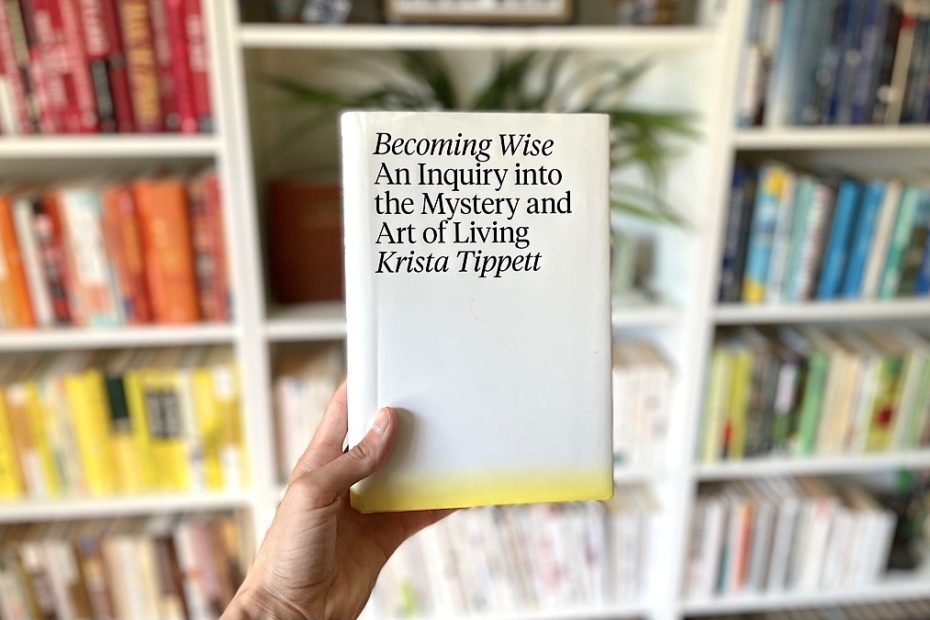
Becoming Wise: An Inquiry Into The Mystery And Art Of Living [Book]
![Becoming Wise: An Inquiry Into The Mystery And Art Of Living [Book]](https://movemequotes.com/wp-content/uploads/2021/06/Becoming-Wise-by-Krista-tippett.jpg)
Book Overview: In Becoming Wise, Krista Tippett has created a master class in living for a fractured world. Fracture, she says, is not the whole story of our time. The enduring question of what it means to be human has become inextricable from the challenge of who we are to one another. She insists on the possibility of personal depth and common life for this century, nurtured by science and “spiritual technologies,” with civility and love as muscular public practice. And, accompanied by a cross-disciplinary dream team of a teaching faculty, she shows us how.
Post(s) Inspired by this Book:
“The real questions are the ones that obtrude upon your consciousness whether you like it or not, the ones that make your mind start vibrating like a jackhammer, the ones that you ‘come to terms with’ only to discover that they are still there. The real questions refuse to be placated. They barge into your life at the times when it seems most important for them to stay away. They are the questions asked most frequently and answered most inadequately, the ones that reveal their true natures slowly, reluctantly, most often against your will.”
Ingrid Bengis, via Sunbeams (Page 112)
“But what is philosophy? Doesn’t it simply mean preparing ourselves for what may come? Don’t you understand that really amounts to saying that if I would so prepare myself to endure, then let anything happen that will? Otherwise, it would be like the boxer exiting the ring because he took some punches. Actually, you can leave the boxing ring without consequence, but what advantage would come from abandoning the pursuit of wisdom? So, what should each of us say to every trial we face? This is what I’ve trained for, for this my discipline!”
Epictetus, Discourses, via The Daily Stoic (Page 155)
“The level of the problem is never the level of the solution.”
Deepak Chopra, The Shadow Effect (Page 64)
“In the service of God, you can learn three things from a child, and seen from a thief. From a child you can learn: (1) always to be happy; (2) never to sit idle; and (3) to cry for everything one wants. From a thief you should learn: (1) to work at night; (2) if one cannot gain what one wants in one night to try again the next night; (3) to love one’s co-workers just as thieves love each other; (4) to be willing to risk one’s life even for a little thing; (5) not to attach too much value to things even though one has risked one’s life for them—just as a thief will resell as stolen article for a fraction of its real value; (6) to withstand all kinds of beatings and tortures but to remain what you are; and (7) to believe that your work is worthwhile and not be willing to change it.”
Dov Baer, the Mazid of Mezeritch, via Sunbeams (Page 101)
“Those who receive the bare theories immediately want to spew them, as an upset stomach does its food. First digest your theories and you won’t throw them up. Otherwise they will be raw, spoiled, and not nourishing. After you’ve digested them, show us the changes in your reasoned choices, just like the shoulders of gymnasts display their diet and training, and as the craft of artisans show in what they’ve learned.”
Epictetus, Discourses, The Daily Stoic (Page 137)
“A wise man is never less alone than when he is alone.”
Jonathan Swift, via Sunbeams (Page 93)
“Believe those who are seeking the truth; doubt those who find it.”
André Gide, via Sunbeams (Page 89)
“Remember to conduct yourself in life as if at a banquet. As something being passed around comes to you, reach out your hand and take a moderate helping. Does it pass you by? Don’t stop it. It hasn’t yet come? Don’t burn in desire for it, but wait until it arrives in front of you. Act this way with children, a spouse, toward position, with wealth—one day it will make you worthy of a banquet with the gods.”
Epictetus, Enchiridion, via The Daily Stoic (Page 59)
“Here’s a funny exercise: think about all the upsetting things you don’t know about—stuff people might have said about you behind your back, mistakes you might have made that never came to your attention, things you dropped or lost without even realizing it. What’s your reaction? You don’t have one because you don’t know about it. In other words, it is possible to hold no opinion about a negative thing. You just need to cultivate that power instead of wielding it accidentally.”
Ryan Holiday, The Daily Stoic (Page 49)