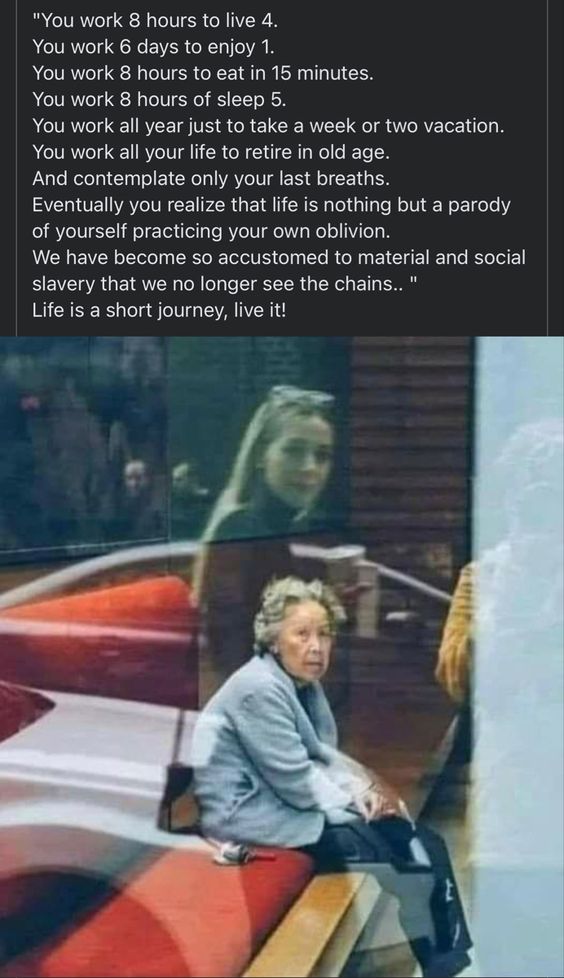
“You are richer than 93 percent of people. Not in money, but in time. Over 108 billion people have lived throughout history. 93 percent of them are dead. You have what every king and queen, every pharaoh and ruler, every CEO and celebrity of the past would give all their wealth and power for: Today.”
James Clear
“People commonly assume that each passing second brings them closer to death; but this is largely and dangerously fallacious. The second in which a drowning man grabs hold of a life preserver or a starving man is offered a bowl of soup does not bring either closer to death but, rather, sharply away from it. People who undergo healthy conversions of habit cut abruptly away from death; wholesome exercise, from a physiological point of view, is not necessarily motion toward death at all. To say that such actions or activities merely delay death is a kind of sophistry; for since death is, in physical terms, a negative state, it is much more pertinent and correct to say that they prolong and increase life. Indeed, time has much less to do with death—for death is, as a cessation of motion, also a cessation of time—than it has to do with life, its most complex embodiment. Thinking that time brings death is less a workable assumption than a moral evasion, an example of our chronic tendency to ascribe our woes and weaknesses to external circumstances rather than to living will.”
Robert Grudin, Time And The Art Of Living (Page 118)
“Free space is useless without uncluttered time. Indeed, a nest of time need not require a special place at all: its only two requirements are that it concern some desirable activity and that it be, barring emergencies, inviolable.”
Robert Grudin, Time And The Art Of Living (Page 91)
“Our days and our lives are pathetically shortened by miscellaneous abuses and confusions of time. We are novices at the art of making plans and have trouble remembering the plans we have made. We ignore the time that is open to us. We diminish ourselves by wishing time to pass. We are, for the most part, incapable of real concentration. Our days are broken by distraction, scrambled up into muddles of chores, errands, impulses, evasions, interruptions and delays, besotted with routine. We characteristically fail to see the ways in which a given period can be expanded, deepened and slowed by the exercise of will and awareness. Deprived of this power and isolated from continuity, we often feel small, momentary, almost transparent, like paper-thin façades of being.”
Robert Grudin, Time And The Art Of Living (Page 20)
“Each day is a minor eternity of over 86,000 seconds. During each second, the number of distinct molecular functions going on within the human body is comparable to the number of seconds in the estimated age of the cosmos. A few seconds are long enough for a revolutionary idea, a startling communication, a baby’s conception, a wounding insult, a sudden death. Depending on how we think of them, our lives can be infinitely long or infinitely short.”
Robert Grudin, Time And The Art Of Living (Page 7)
“In planning ahead we should remember that usable time is at best 80 to 85 percent of total time. Long unbroken periods contain more usable time than do short periods totaling the same length.”
Robert Grudin, Time And The Art Of Living (Page 3)
Time And The Art Of Living [Book]

Book Overview: This is a book about time–about one’s own journey through it and, more important, about enlarging the pleasure one takes in that journey. It’s about memory of the past, hope and fear for the future, and how they color, for better and for worse, one’s experience of the present. Ultimately, it’s a book about freedom–freedom from despair of the clock, of the aging body, of the seeming waste of one’s daily routine, the freedom that comes with acceptance and appreciation of the human dimensions of time and of the place of each passing moment on life’s bounteous continuum. For Robert Grudin, living is an art, and cultivating a creative partnership with time is one of the keys to mastering it. In a series of wise, witty, and playful meditations, he suggests that happiness lies not in the effort to conquer time but rather in learning “to bend to its curve,” in hearing its music and learning to dance to it. Grudin offers practical advice and mental exercises designed to help the reader use time more effectively, but this is no ordinary self-help book. It is instead a kind of wisdom literature, a guide to life, a feast for the mind and for the spirit.
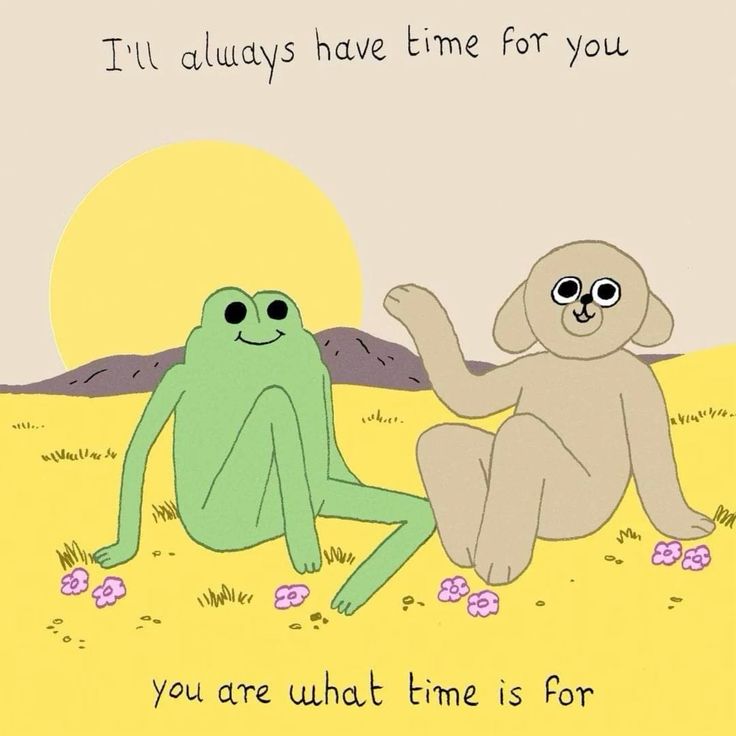
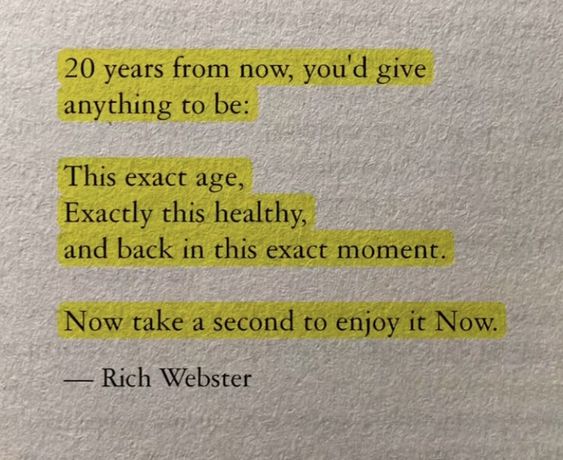
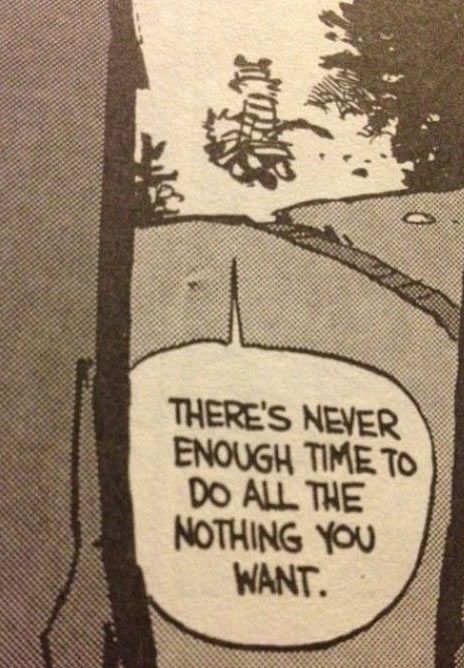
The Midnight Library [Book]
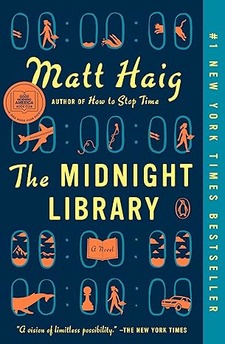
Book Overview: Somewhere out beyond the edge of the universe there is a library that contains an infinite number of books, each one the story of another reality. One tells the story of your life as it is, along with another book for the other life you could have lived if you had made a different choice at any point in your life. While we all wonder how our lives might have been, what if you had the chance to go to the library and see for yourself? Would any of these other lives truly be better? In The Midnight Library, Matt Haig’s enchanting blockbuster novel, Nora Seed finds herself faced with this decision. Faced with the possibility of changing her life for a new one, following a different career, undoing old breakups, realizing her dreams of becoming a glaciologist; she must search within herself as she travels through the Midnight Library to decide what is truly fulfilling in life, and what makes it worth living in the first place.
“Try to imagine a life without timekeeping. You probably can’t. You know the month, the year, the day of the week. There is a clock on your wall or the dashboard of your car. You have a schedule, a calendar, a time for dinner or a movie. Yet all around you, timekeeping is ignored. Birds are not late. A dog does not check its watch. Deer do not fret over passing birthdays. Man alone measures time. Man alone chimes the hour. And, because of this, man alone suffers a paralyzing fear that no other creature endures. A fear of time running out.”
Mitch Albom