“Commonly old age brings on retirement from work; but in many cases it is truer to say that retirement brings on old age. The mind, like any other organ, retains and renews its strength only through exercise. In active life, whatever its negative stresses and trials, this exercise is emotional as well as rational, creative as well as defensive. The demands of communal effort constitute an irreplaceable exercise of mind, as does the state of being responsible or the state of being needed, no matter what the responsibility or the need. In retirement we lose these healthy activities, and the freedom we gain is often a poor exchange for the enervating vacuum of challenge, the dry rot of immobility which leaves us, month by month, less supple, less responsive and less vigorous. And even worse than this, to the extent that in active life we have established our own identity as social beings, we. become in retirement less and less ourselves.”
Robert Grudin, Time And The Art Of Living (Page 117)
The 10 Rules of Ikigai (for a Longer and Happier Life) + 6 Bonus Quotes from The Book
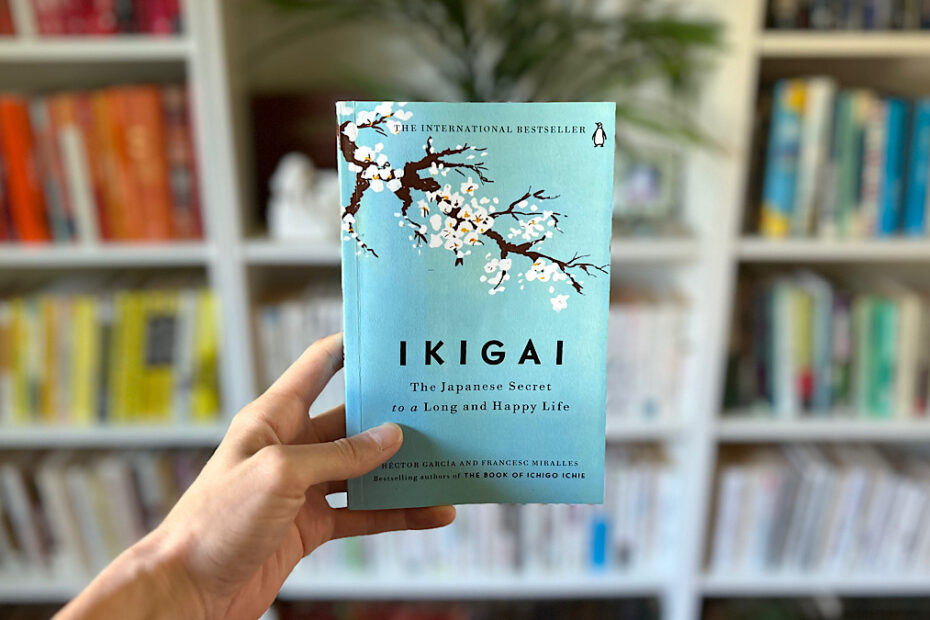
Excerpt: What is Ikigai? Often translated as “a reason for being,” it’s a concept that—when fully understood—can add years and joy to your life…
Read More »The 10 Rules of Ikigai (for a Longer and Happier Life) + 6 Bonus Quotes from The Book
“There is, in fact, no word in Japanese that means retire in the sense of ‘leaving the workforce for good’ as in English. According to Dan Buettner, a National Geographic reporter who knows the country well, having a purpose in life is so important in Japanese culture that our idea of retirement simply doesn’t exist there.”
Héctor García and Francesc Miralles, Ikigai (Page 10)
“A naively formulated goal transmutes, with time, into the sinister form of the life-lie. One forty-something client told me his vision, formulated by his younger self: ‘I see myself retired, sitting on a tropical beach, drinking margaritas in the sunshine.’ That’s not a plan. That’s a travel poster. After eight margaritas, you’re fit only to await the hangover. After three weeks of margarita-filled days, if you have any sense, you’re bored stiff and self-disgusted. In a year, or less, you’re pathetic. It’s just not a sustainable approach to later life.” ~ Jordan Peterson, via 12 Rules for Life (Page 210)
“It used to be that the goal was to get rich and retire by the age of 40. Now the goal is to get rich and work until you’re 90. Nearly half of all individuals who earn $750,000 per year or more say they will never retire, or if they do, the earliest they would consider it is age 70.” ~ Tony Robbins, Money: Master the Game

“When we reach sixty-two, we are likely to interpret feelings of exhaustion and boredom as the signal to retire. But couldn’t they just as easily be the call to reinvent ourselves? As we age it seems harder and harder to let our authentic dharma reinvent us. We imagine somehow that the risks are greater. We tend to think that leaping off cliffs is for the young. But no. Actually – when better to leap off cliffs?”
Stephen Cope, The Great Work Of Your Life
“I remember reading about the astounding number of people in this country who die within three years of retiring, which proves to me that if you lose the sense that you are producing or contributing in some way, you literally lose the will to live, and that if you do have a reason to hang on, you will.” ~ Anthony Robbins, Awaken the Giant Within