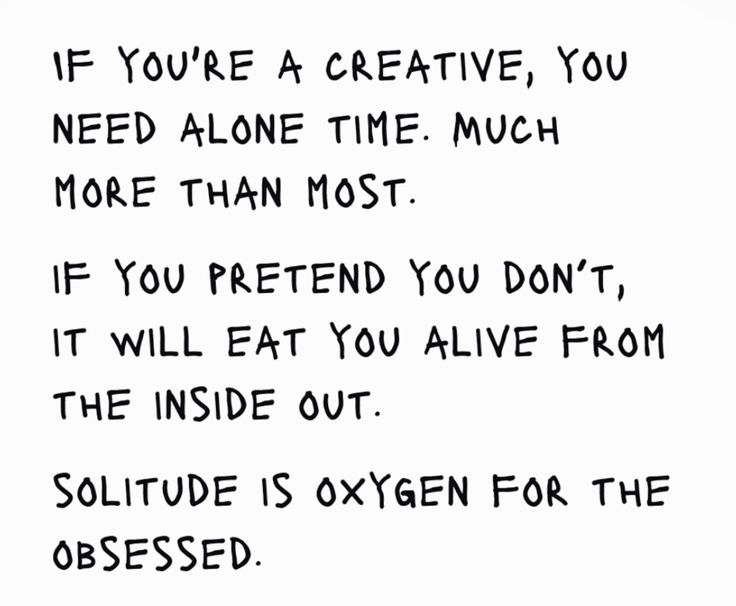
“The great crime novelist Raymond Chandler set aside four hours each day where he had to be completely alone. During his solitude he gave himself permission not to write if he wasn’t feeling inspired. However, if he chose not to write, he had to sit in his writing chair and do nothing. Eventually, Chandler would become so goddamn bored doing nothing, he’d to write.”
Cole Schafer
“When I was writing, it was necessary for me to read after I had written. If you kept thinking about it, you would lose the thing that you were writing before you could go on with it the next day. It was necessary to get exercise, to be tired in the body, and it was very good to make love with whom you loved. That was better than anything. But afterwards, when you were empty, it was necessary to read in order not to think or worry about your work until you could do it again. I had learned already never to empty the well of my writing, in the deep part of the well, and let it refill at night from the springs that fed it.”
Ernest Hemingway, via A Moveable Feast


“Some days I show up and do the best writing of my life. Other days, many days, I show up and do writing that is underwhelmingly average (and reeking of a few typos). The lesson I hope you walk away with in watching me work is not that I am flawless, but that a deeply flawed individual can achieve something that transcends his lackluster abilities by simply showing up, again and again, over the course of a lifetime.”
Cole Schafer

“Develop your taste. Take a good, long look at anyone creating meaningful work. You will see that it wasn’t their skill that came first but their taste. With time, they became so inspired by their taste, that they wanted to create something themselves that could live up to it. In other words, they honed their skills to make something worthy of their taste. You shouldn’t be a snob about many things in life. Your taste, however, is an exception. Watch great films. Read gorgeous books. Spin brilliant records. Eat delicious food. Study extraordinary people. Consume. Consume. Consume. Develop your taste. Refine your palate. Your skills will follow.”
Cole Schafer
“John D. Rockefeller would take regular breaks from his notoriously demanding schedule to mill about in his garden—it was his personal escape. Find your “garden” and go there often. Practice stillness, flex the solitude muscle. Be bored for at least 15 minutes per day. It’s an unlock for creativity and mindfulness.”
Sahil Bloom
“The muses never bless the unfocused. And even if they did, how would they notice?”
Ryan Holiday, Discipline Is Destiny (Page 124)

“Be regular and orderly in your life, so that you may be violent and original in your work.”
Gustave Flaubert, via Discipline Is Destiny (Page 42) | Read Matt’s Blog on this quote ➜
“I tell my students, one of the most important things they need to know is when they are their best, creatively. They need to ask themselves, What does the ideal room look like? Is there music? Is there silence? Is there chaos outside or is there serenity outside? What do I need in order to release my imagination?”
Toni Morrison, via Discipline Is Destiny (Page 40)