“Commonly old age brings on retirement from work; but in many cases it is truer to say that retirement brings on old age. The mind, like any other organ, retains and renews its strength only through exercise. In active life, whatever its negative stresses and trials, this exercise is emotional as well as rational, creative as well as defensive. The demands of communal effort constitute an irreplaceable exercise of mind, as does the state of being responsible or the state of being needed, no matter what the responsibility or the need. In retirement we lose these healthy activities, and the freedom we gain is often a poor exchange for the enervating vacuum of challenge, the dry rot of immobility which leaves us, month by month, less supple, less responsive and less vigorous. And even worse than this, to the extent that in active life we have established our own identity as social beings, we. become in retirement less and less ourselves.”
Robert Grudin, Time And The Art Of Living (Page 117)
“The idea of my own advancing age has never particularly bothered me, perhaps because my youthful years were much less enjoyable than the time I have now. But today, prompted by some new ache or wrinkle, my mind glanced onto the subject, and I was briefly invaded by a curious feeling. It was the same sort of mood that is cultivated by writers of thrillers, experienced by heroes who, early in the story, are knocked out or drugged, and awake to find themselves in wholly unfamiliar places, damp moldering cellars or drab rooms whose barred windows look out on alien courtyards, far from where the heroes’ friends or colleagues expect them to be, far from where they or anyone would want to be. They feel dismay, confusion and impotent anger, and these were what I momentarily felt; but in my case the feeling did not concern place but rather time. I felt stranded in my forties, a young spirit in a withering body. For a few instants I refused to acknowledge my body as my own, denied the connection between awareness and the protoplasm from which it springs. It was not until later that I realized taht this refusal, this anger, was the real crux of aging: that the pain of growing old lies specifically in the fact taht part of us does not grow old.”
Robert Grudin, Time And The Art Of Living (Page 113)
Time And The Art Of Living [Book]

Book Overview: This is a book about time–about one’s own journey through it and, more important, about enlarging the pleasure one takes in that journey. It’s about memory of the past, hope and fear for the future, and how they color, for better and for worse, one’s experience of the present. Ultimately, it’s a book about freedom–freedom from despair of the clock, of the aging body, of the seeming waste of one’s daily routine, the freedom that comes with acceptance and appreciation of the human dimensions of time and of the place of each passing moment on life’s bounteous continuum. For Robert Grudin, living is an art, and cultivating a creative partnership with time is one of the keys to mastering it. In a series of wise, witty, and playful meditations, he suggests that happiness lies not in the effort to conquer time but rather in learning “to bend to its curve,” in hearing its music and learning to dance to it. Grudin offers practical advice and mental exercises designed to help the reader use time more effectively, but this is no ordinary self-help book. It is instead a kind of wisdom literature, a guide to life, a feast for the mind and for the spirit.
“I think there’s something beautiful about being lucky enough to witness a thing on its way out.”
Becky Chambers, A Psalm For The Wild-Built (Page 99)
“There are two ways to live a longer life: 1) Biologically. Extend the timeline between your birth and your death. 2) Psychologically. Fit more lives into whatever time you are given. Make each decade rich with experiences and perhaps you can live a handful of lives before you are done.”
James Clear

The 10 Rules of Ikigai (for a Longer and Happier Life) + 6 Bonus Quotes from The Book
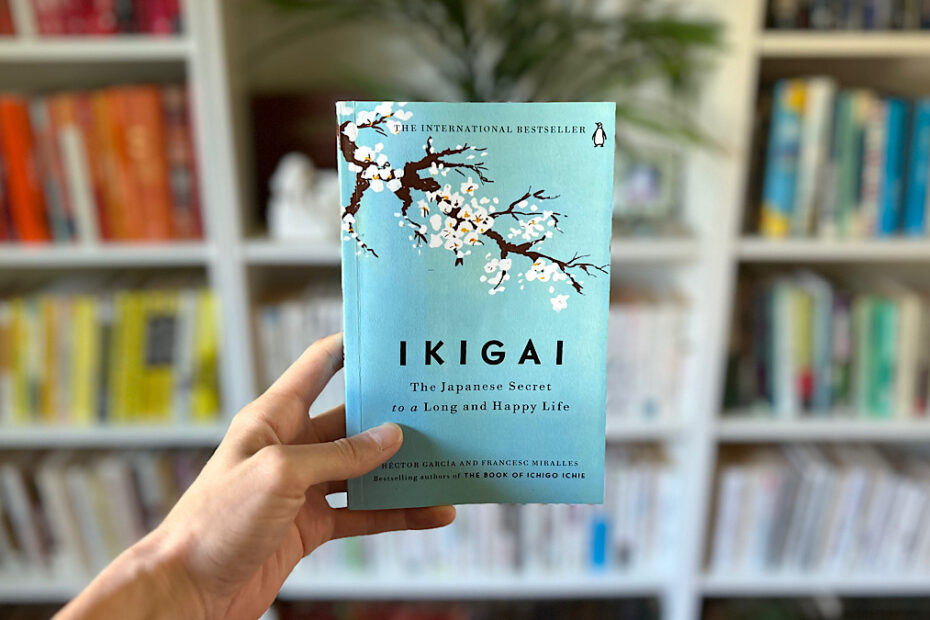
Excerpt: What is Ikigai? Often translated as “a reason for being,” it’s a concept that—when fully understood—can add years and joy to your life…
Read More »The 10 Rules of Ikigai (for a Longer and Happier Life) + 6 Bonus Quotes from The Book
“My secret to a long life is always saying to myself, ‘Slow down,’ and ‘Relax.’ You live much longer if you’re not in a hurry.”
Unknown, via Ikigai (Page 116)
“Only staying active will make you want to live a hundred years.”
Japanese proverb, via Ikigai
Ikigai: The Japanese Secret to a Long and Happy Life [Book]
Book Overview: According to the Japanese, everyone has an ikigai—a reason for living. And according to the residents of the Japanese village with the world’s longest-living people, finding it is the key to a happier and longer life. Having a strong sense of ikigai—where what you love, what you’re good at, what you can get paid for, and what the world needs all overlap—means that each day is infused with meaning. It’s the reason we get up in the morning. In researching this book, the authors interviewed the residents of the Japanese village with the highest percentage of 100-year-olds—one of the world’s Blue Zones. Ikigai reveals the secrets to their longevity and happiness: how they eat, how they move, how they work, how they foster collaboration and community, and—their best-kept secret—how they find the ikigai that brings satisfaction to their lives. And it provides practical tools to help you discover your own ikigai.
Post(s) Inspired by this Book:
“It almost always happens that lovers become childlike—because love accepts you. It makes no demands on you. Love does not say, ‘Be this, be that.’ Love simply says, ‘Be yourself. You are good as you are. You are beautiful as you are.’ Love accepts you. Suddenly you start dropping your ideals, ‘shoulds,’ personalities. You drop your old skin, and again you become a child. Love makes people young.'”
Osho, Everyday Osho (Page 279)
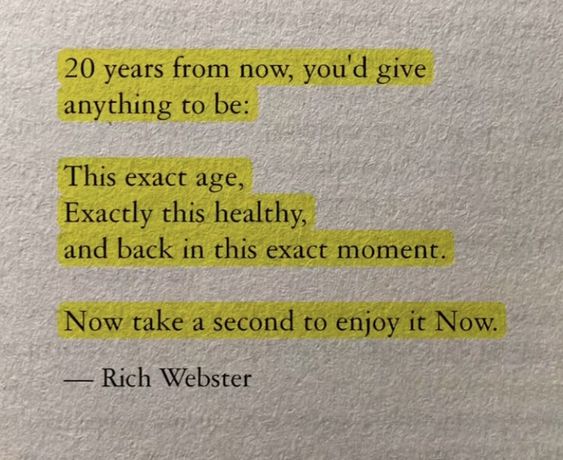
“The producer of old age is habit: the deathly process of doing the same thing in the same way at the same hour day after day, first from carelessness, then from inclination, at last from cowardice or inertia. Habit is necessary; but it is the habit of having careless habits, of turning a trail into a rut, that must be incessantly fought against if one is to remain alive… one can remain alive long past the usual date of disintegration if one is unafraid of change, insatiable in intellectual curiosity, interested in big things, and happy in small ways.”
Edith Wharton