Skip to content

Heavy: An American Memoir [Book]
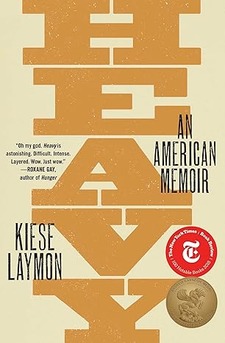
    Book Overview: In Heavy, Laymon writes eloquently and honestly about growing up a hard-headed black son to a complicated and brilliant black mother in Jackson, Mississippi. From his early experiences of sexual violence, to his suspension from college, to time in New York as a college professor, Laymon charts his complex relationship with his mother, grandmother, anorexia, obesity, sex, writing, and ultimately gambling. Heavy is a “gorgeous, gutting…generous” (The New York Times) memoir that combines personal stories with piercing intellect to reflect both on the strife of American society and on Laymon’s experiences with abuse. By attempting to name secrets and lies he and his mother spent a lifetime avoiding, he asks us to confront the terrifying possibility that few in this nation actually know how to responsibly love, and even fewer want to live under the weight of actually becoming free.
      “I had to go through so much stupidity, so much vice, so much error, so much disgust and disillusion and distress, merely in order to become a child again and begin afresh. But it was right, my heart says yes, my eyes are laughing. I had to experience despair, I had to sink down to the most foolish of all thoughts, to the thought of suicide, in order to experience grace, to hear om again, to sleep properly again and to awaken properly again. I had to become a fool in order to find Atman in me again. I had to sin in order to live again.”

      Hermann Hesse, Siddhartha (Page 85)

        “If energy is there and not used rightly it goes sour, becomes bitter. We create energy every day, and it has to be used every day. You cannot accumulate it; you cannot be a miser about it. Find ways to use your energy—games, jogging, running—and delight in it. Use the energy, and then you will feel very calm. That calmness will be totally different from a forced stillness. You can force yourself, you can have energy and repress it, but you are sitting on a volcano, and there is a constant trembling inside. The more energy you use, the more fresh energy will become available.”

        Osho, Everyday Osho (Page 243)

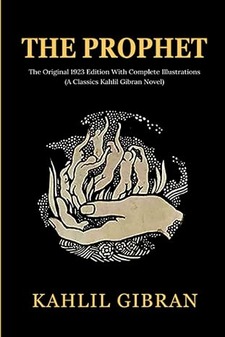
        The Prophet [Book]

          Book Overview: Kahlil Gibran’s masterpiece, The Prophet, is one of the most beloved classics of our time. The Prophet has been translated into over 100 different languages, making it one of the most translated books in history and the American editions alone have sold more than nine million copies. The Prophet is a collection of poetic essays that are philosophical, spiritual, and, above all, inspirational. Gibran’s musings are divided into twenty-eight chapters covering such sprawling topics as love, marriage, children, giving, eating and drinking, work, joy and sorrow, housing, clothes, buying and selling, crime and punishment, laws, freedom, reason and passion, pain, self-knowledge, teaching, friendship, talking, time, good and evil, prayer, pleasure, beauty, religion, and death.

          Post(s) Inspired by this Book:

            “If life is fair, and it will be, it will serve you immeasurable beauties, joys and pleasures—you will feel at times that you do not have the capacity to take them in. You will. Our hearts they are boundless. If life is fair, and it will be, it will bring you huge, merciless sorrows. Devastations of your boundless heart. I wish for you the grace to persevere and accept them across time, for that is the only way these kinds of things can be taken in. A wise and articulate student once told me that struggle is vital. For all of the mundane days in between joy and sorrow? Persevere.”

            Dan Weiss | Read Matt’s Blog on this Quote ➜

              “We can’t visit every place or meet every person or do every job, yet most of what we’d feel in any life is still available. We don’t have to play every game to know what winning feels like. We don’t have to hear every piece of music in the world to understand music. We don’t have to have tried every variety of grape from every vineyard to know the pleasure of wine. Love and laughter and fear and pain are universal currencies. We just have to close our eyes and savour the taste of the drink in front of us and listen to the song as it plays. We are as completely and utterly alive as we are in any other life and have access to the same emotional spectrum. We only need to be one person. We only need to feel one existence. We don’t have to do everything in order to be everything, because we are already infinite. While we are alive we always contain a future of multifarious possibility.”

              Matt Haig, The Midnight Library (Page 277)

                “It is not the lives we regret not living that are the real problem. It is the regret itself. It’s the regret that makes us shrivel and wither and feel like our own and other people’s worst enemy. We can’t tell if any of those other versions would have been better or worse. Those lives are happening, it is true, but you are happening as well, and that is the happening we have to focus on.”

                Matt Haig, The Midnight Library (Page 277)

                  “She might have missed those particular opportunities that led her to become an Olympic swimmer, or a traveller, or a vineyard owner, or a rock star, or a planet-saving glaciologist, or a Cambridge graduate, or a mother, or the million other things, but she was still in some way all those people. They were all her. She could have been all those amazing things, and that wasn’t depressing, as she had once thought. Not at all. It was inspiring. Because now she saw the kinds of thing she could do when she put herself to work. And that, actually, the life she had been living had its own logic to it. What sometimes feels like a trap is actually just a trick of the mind. She didn’t need a vineyard or a California sunset to be happy. She didn’t even need a large house and the perfect family. She just needed potential. And she was nothing if not potential.”

                  Matt Haig, The Midnight Library (Page 269)