Skip to content

The Mountain Is You [Book]
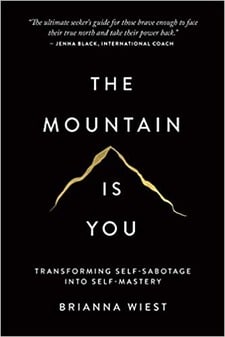
    Book Overview: This is a book about self-sabotage. Why we do it, when we do it, and how to stop doing it—for good. Coexisting but conflicting needs create self-sabotaging behaviors. This is why we resist efforts to change, often until they feel completely futile. But by extracting crucial insight from our most damaging habits, building emotional intelligence by better understanding our brains and bodies, releasing past experiences at a cellular level, and learning to act as our highest potential future selves, we can step out of our own way and into our potential. For centuries, the mountain has been used as a metaphor for the big challenges we face, especially ones that seem impossible to overcome. To scale our mountains, we actually have to do the deep internal work of excavating trauma, building resilience, and adjusting how we show up for the climb. In the end, it is not the mountain we master, but ourselves.

    Post(s) Inspired by this Book:

    48 Brianna Wiest Quotes from The Mountain Is You on Self-Sabotage and Healing

      “The overuse of the words toxic and narcissist not only show that there is a lack of compassion in how we deal with each other, but also that it is becoming trendy to expect each other people to not make any mistakes. There are obviously people out there who have caused harm, but we have to make sure that we find a healthy middle path where we create safe spaces for ourselves without expecting perfection from everyone we encounter.”

      Yung Pueblo

        “…The more civilized and moral we outwardly become, the more potentially dangerous is the Shadow, which we so fiercely deny. The solution is not more repression and correctness. We can never alter human nature through enforced niceness. The pitchfork doesn’t work. Nor is the solution to seek release for our Shadow in the group, which is volatile and dangerous. Instead the answer is to see our Shadow in action and become more self-aware. It is hard to project onto others our own secret impulses or to overidealize some cause, once we are made aware of the mechanism operating within us.”

        Robert Greene, The Daily Laws (Page 376)

          “Our emotional history can sometimes be so dense that it limits our capacity to change our behavior to the point that it keeps us in a state of mere survival. But no emotional baggage from the past is beyond healing.”

          Yung Pueblo

            “Healing does not erase the past, and the point of healing is not to forget what has happened. Old memories from hard moments may come up even after deep healing has taken place, but what shifts is how we react to them when they arise. If the intensity of the reaction is decreasing, then real progress is being made. This has nothing to do with suppressing the reaction; it is just a measure of what is actually happening in the mind, It is possible to feel your truth without getting consumed by it or letting it control your behavior.”

            Yung Pueblo

              “Without altering the facts of the situation I am facing and without ignoring the reality of what must be done, what is the most useful and empowering story I can tell myself about what is happening and what I need to do next?”

              James Clear, Blog