Skip to content

Ikigai: The Japanese Secret to a Long and Happy Life [Book]
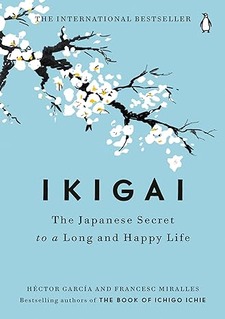
    Book Overview: According to the Japanese, everyone has an ikigai—a reason for living. And according to the residents of the Japanese village with the world’s longest-living people, finding it is the key to a happier and longer life. Having a strong sense of ikigai—where what you love, what you’re good at, what you can get paid for, and what the world needs all overlap—means that each day is infused with meaning. It’s the reason we get up in the morning. In researching this book, the authors interviewed the residents of the Japanese village with the highest percentage of 100-year-olds—one of the world’s Blue Zones. Ikigai reveals the secrets to their longevity and happiness: how they eat, how they move, how they work, how they foster collaboration and community, and—their best-kept secret—how they find the ikigai that brings satisfaction to their lives. And it provides practical tools to help you discover your own ikigai.

    Post(s) Inspired by this Book:
      “Success is getting what you want; happiness is wanting what you get.”

      Dale Carnegie

        “Healing ourselves isn’t about constantly feeling bliss, being attached to bliss is a bondage of its own. Trying to force ourselves to be happy is counterproductive, because it suppresses the sometimes tough reality of the moment, pushing it back within the depths of our being, instead of allowing it to arise and release. Healing ourselves is the personal movement we embark on to let go of all the conditioning that limits our freedom; in this journey there will undoubtedly be moments of bliss and difficulty. Real happiness and wisdom grow from the reality we experience, not from the fleeting moments of bliss that we feel.”

        Yung Pueblo

          “Toxic people get all the attention. Healthy people get all the happiness.”

          Mark Manson

            “Having a fluid sense of identity, where you allow yourself to change, leads to a happier life because you are moving with the natural flow of change as opposed to against it. You exist because of change. When you think about who you are at the ultimate level, you are essentially the coming together of physical and mental phenomena at incredibly fast speeds, from the cellular down to the subatomic, everything about you is in motion. This should inspire you to allow your preferences, likes, and dislikes to evolve over time. Don’t be attached to the old you, let the new you emerge.”

            Yung Pueblo

              “The deeper that sorrow carves into your being, the more joy you can contain.”

              Kahlil Gibran, The Prophet (Page 27)

                “You will never find one answer to what makes you happy. There are many answers, and they change based on your current state. People need to relax, but if all you do is sit on the beach, it gets old. People find meaning in work, but if all you do is work, it gets exhausting. People benefit from exercise, but if all you do is exercise, it gets unhealthy. Happiness will always be fleeting because your needs change over time. The question is: what do you need right now?”

                James Clear

                  “False happiness [is] even worse than real sadness, because at least in that sadness there is a reality. If you are sad—but truly and sincerely sad—that sadness will enrich you. It gives you a depth, an insight. It makes you aware of life and its infinite possibilities and of the limits of the human mind, the smallness of human consciousness encountering the infinity all around, the fragile life always surrounded by death. When you are really sad you become aware of all these things. You become aware that life is not just life—it is death too.”

                  Osho, Everyday Osho (Page 217)

                    “Happiness is bigger than health. Health is the happiness of the body, happiness is the health of the soul.”

                    Osho, Everyday Osho (Page 209)

                      “It would have made things a lot easier if we understood there was no way of living that can immunise you against sadness. And that sadness is intrinsically part of the fabric of happiness. You can’t have one without the other. Of course, they come in different degrees and quantities. But there is no life where you can be in a state of sheer happiness forever. And imagining there is just breeds more unhappiness in the life you’re in.”

                      Matt Haig, The Midnight Library (Page 179)