“Like your bedroom, your writing room should be private, a place where you go to dream. Your schedule—in at about the same time every day, out when your thousand words are on paper or disk—exists in order to habituate yourself, to make yourself ready to dream just as you make yourself ready to sleep by going to bed at roughly the same time each night and following the same ritual as you go. In both writing and sleeping, we learn to be physically still at the same time we are encouraging our minds to unlock from the humdrum rational thinking of our daytime lives. And as your mind and body grow accustomed to a certain amount of sleep each night—six hours, seven, maybe even the recommended eight—so can you train your waking mind to sleep creatively and work out the vividly imagined waking dreams which are successful works of fiction.”
Stephen King, via Daily Rituals (Page 224)
“I’ve never believed that one should wait until one is inspired because I think that the pleasures of not writing are so great that if you ever start indulging them you will never write again.”
John Updike, via Daily Rituals (Page 195) | Read Matt’s Blog on this quote ➜
“Some pianists say they are the slaves of their instrument. If I am its slave, all I can say is—I have a very kind master.”
Sergey Rachmaninoff, Daily Rituals (Page 179)
“My life has been my music, it’s always come first, but the music ain’t worth nothing if you can’t lay it on the public.”
Louis Armstrong, via Daily Rituals (Page 114) (Read Matt’s Blog On This Quote)
“I don’t believe in draining the reservoir, do you see? I believe in getting up from the typewriter, away from it, while I still have things to say.”
Henry Miller, via Daily Rituals (Page 53) | Read Matt’s Blog on this quote ➜
Daily Rituals [Book]
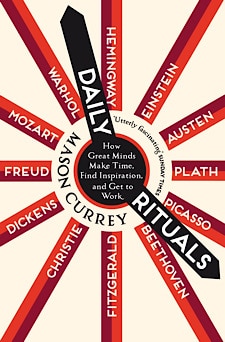
Book Overview: How is a novel written? A masterpiece painted? A symphony composed? Benjamin Franklin took daily naked air baths and Toulouse-Lautrec pained in brothels. Edith Sitwell worked in bed, and George Gershwin composed at the piano in pyjamas. Freud worked sixteen hours a day, but Gertrude Stein could never write for more than thirty minutes, and F. Scott Fitzgerald wrote in gin-fuelled bursts—he believed alcohol was essential to his creative process. Here are the working routines of more than a hundred and sixty of the greatest philosophers, writers, composers and artists ever to have lived, who, whether by amphetamines or alcohol, headstands or boxing, made time and got to work.
Post(s) Inspired by this Book:
- 13 Intriguing Quotes from Daily Rituals and How Great Creators—Create
- Gerhard Richter Quote on Ideas and How They Won’t Come to You—You Have To Find Them (Beyond the Quote Day 413)
- Henry Miller Quote on Not Draining The Reservoir and Finishing Before You’re Done (Beyond the Quote Day 418)
- Haruki Murakami Quote on Routine and How It’s A Form Of Mesmerism (Beyond the Quote Day 420)
- John Updike Quote on Writing and How Waiting For Inspiration Can Backfire (Beyond the Quote Day 421)
- Willa Cather Quote on Writing and Making It An Adventure Rather Than A Chore (Beyond the Quote Day 423)
“We don’t tolerate typos in commercial products, and the market has the same feeling about design that’s lazy or out of place. Graphic design represents an emotional commitment to the work. Long before we read the words or understand the images, we see the layout. Kerning and color and weight and form arrive in our brains before we have decided what the words on the page actually mean. You wouldn’t wear a clown suit to a job interview, and yet people dress up their ideas in clown suits all the time.”
Seth Godin, Blog
“If you never copy best practices, you’ll have to repeat all the mistakes yourself. If you only copy best practices, you’ll always be one step behind the leaders.”
James Clear, Blog
“There is a field where all wonderful perfections of microscope and telescope fail. All exquisite niceties of weights and measure as well as that which is behind them, the keen and driving power of the mind. No facts, however indubitably detected, no effort or reason, however magnificently maintained, can prove that Bach’s music is beautiful.”
Edith Hamilton, Sunbeams (Page 17)
“I’m often asked where my melodies and lyrics come from. I may never fully comprehend how a song sprouts from nothingness into existence, and truthfully, I’m not tempted to decode the mystery. I hope to be constantly surprised, in amazement of how the tiny seed of a possible chord or lyric miraculously springs to life. That unexplainable process, that alchemy, is part of what separates art from logic and reason. I don’t create from a set of rules or formulas. I tap into my true feelings and experiences and allow them to guide me.”
Alicia Keys, More Myself (Page 60)
“The magic in any art is not only in its technique but in its authenticity. Truth in its rawest form is what resonates most powerfully.”
Alicia Keys, More Myself (Page 39)
Ethan Hawke Quote on Art and Why Human Creativity Matters
“Do you think human creativity matters? Well, most people don’t spend a lot of time thinking about poetry, right? They have a life to live and they’re really not that concerned with Allen Ginsberg’s poems or anyone’s poems—until, their father dies; they go to a funeral; you lose a child; someone breaks your heart. And all of a sudden you’re desperate for making sense out of this life. ‘Has anybody felt this bad before? How did they come out of this cloud?’ Or the inverse—something great. You meet somebody and your heart explodes—you love them so much you can’t even see straight. You’re dizzy. ‘Did anybody feel like this before? What is happening to me?’ And that’s when art’s not a luxury—it’s actually sustenance. We need it.”
Ethan Hawke, TED
Beyond the Quote (276/365)
Has anybody felt as bad as you might be feeling? Yes. And worse. How did they come out of that cloud? They wrote about it. Talked about it. Created something with it. They expressed it. Connected with other people about it. And many of them left it there for people, like you, to find and possibly connect with, too. Have you found what they left for you? Or have you been distracted? Have you even tried to search or are you too busy not looking? Human creativity—art—is the sustenance we need to nourish our souls.
Read More »Ethan Hawke Quote on Art and Why Human Creativity Matters“There’s a thing that worries me sometimes when you talk about creativity because it can have this kind of feel that it’s just nice, or warm, or pleasant—it’s not. It’s vital. It’s the way we heal each other. In singing our song, in telling our story, in inviting you to say, ‘Hey, listen to me and I’ll listen to you,’ we’re starting a dialog. And when you do that this healing happens. And we come out of our corners. And we start to witness each other’s common humanity. We start to assert it. And when we do that? Really good things happen.”
Ethan Hawke, TED
An Argument For Art — And Why You Should Be Creating With Every Opportunity You Get
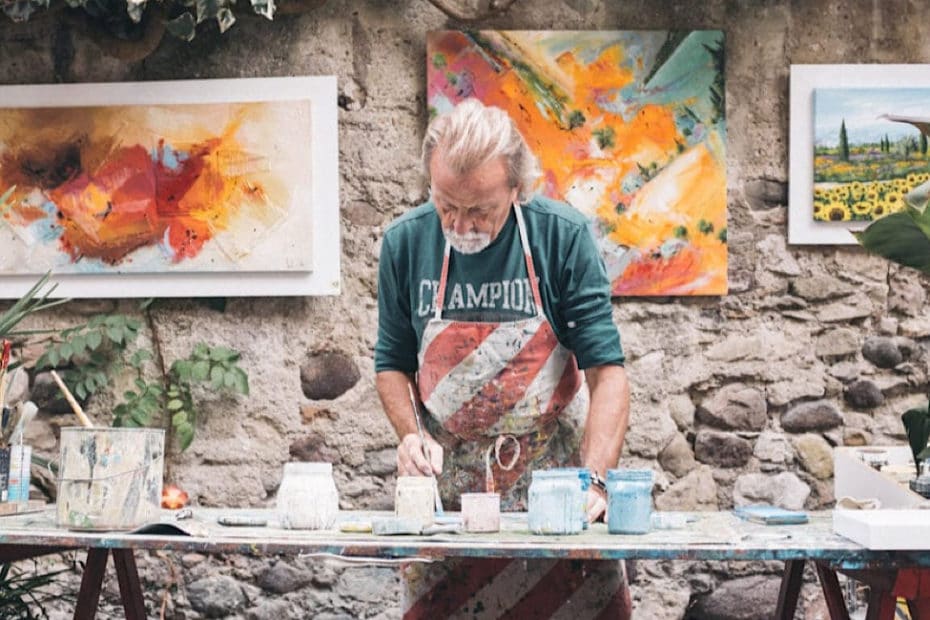
Excerpt: Think about everything that has to happen before you even get to consider creating something. It’s a miracle that art is a thought for you…
Read More »An Argument For Art — And Why You Should Be Creating With Every Opportunity You Get
Witt Lowry Quote from Debt on How Things That Are Man-Made Don’t Make The Man
“I should have known that somethin’ man-made couldn’t make me /
I say I’m makin’ music, or is music what creates me?”
Witt Lowry, Debt, Nevers Road
Beyond the Quote (208/365)
Nothing man-made makes the man. It’s what the man makes that makes the man. What somebody else made is a reflection of them. You obtaining what they made doesn’t make you into any kind of different person at all. It might reveal the type of person you are but it doesn’t change who you are. To understand this is to understand the power in making and creating. To forget this is to forget and never realize who you are to yourself or the world.
Read More »Witt Lowry Quote from Debt on How Things That Are Man-Made Don’t Make The Man