
“Each day is a minor eternity of over 86,000 seconds. During each second, the number of distinct molecular functions going on within the human body is comparable to the number of seconds in the estimated age of the cosmos. A few seconds are long enough for a revolutionary idea, a startling communication, a baby’s conception, a wounding insult, a sudden death. Depending on how we think of them, our lives can be infinitely long or infinitely short.”
Robert Grudin, Time And The Art Of Living (Page 7)
Archives

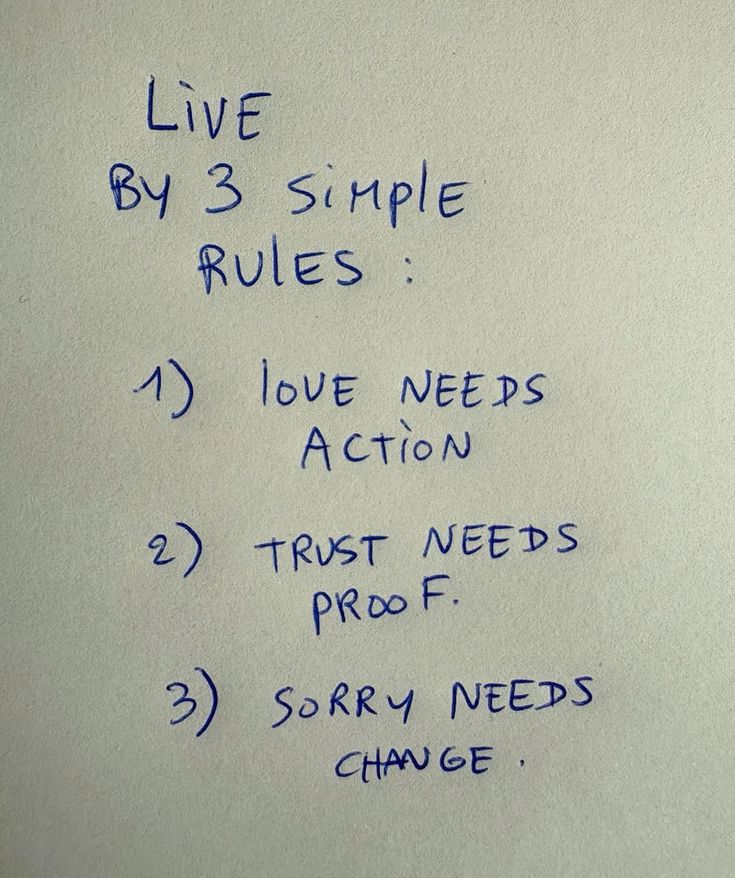
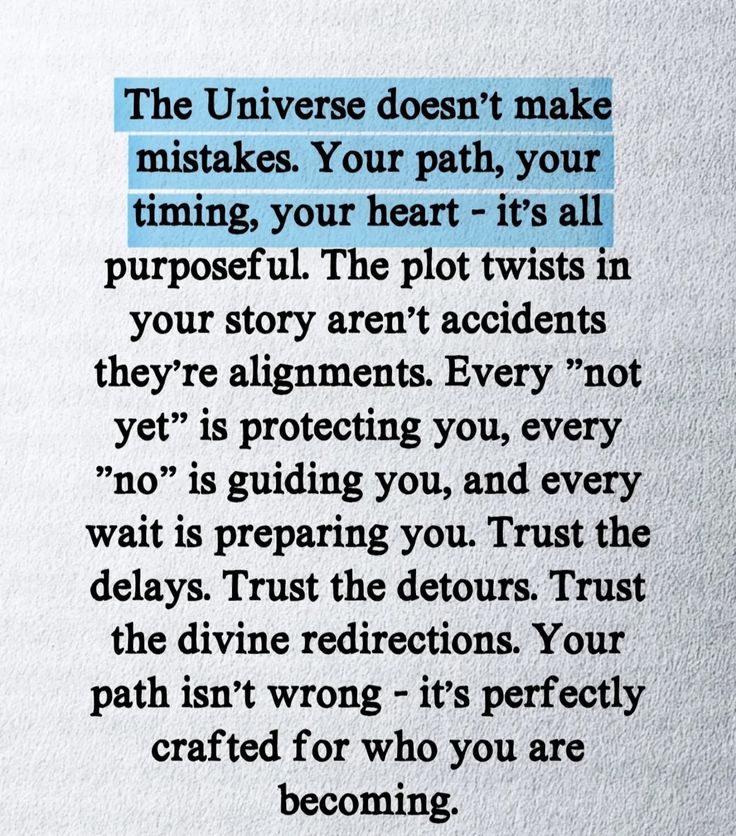
“Intentionally create a loving relationship between you and yourself. How you treat yourself can easily become how you treat your partner. Loving another person is greatly shaped by how strong your self-love is. The way you accept yourself, talking to yourself gently in your mind, not forcing yourself to be perfect, all the ways that you activate your self-love, will end up framing the shape of your relationship.”
Yung Pueblo
“Rooms can be vessels of psychologoical temporality, silently encouraging specific attitudes toward time: The furniture of the past: shelved books, dried flowers, windows facing west, antiques, old photographs and paintings, lamplight, miscellaneous articles, complicated space. The furniture of the present: chairs and tables chosen for utility, a bowl of fruit, an open book, current periodicals, windows to the south, overhead lights, cut flowers or potted plants, modern art, mirrors. The furniture of the future: bare walls, a skylight, windows facing east, much open space, a barometer, clear desk, sharpened pencils, blank pad, unopened book, unopened bottle of wine, skylights, light colors, large doorless openings to other rooms.”
Robert Grudin, Time And The Art Of Living (Page 6)

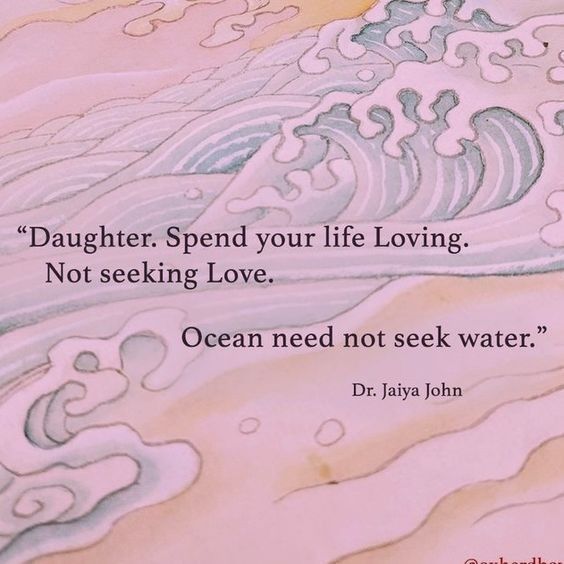

“When someone is seeking, it happens quite easily that he only sees the thing that he is seeking; that he is unable to find anything, unable to absorb anything, because he is only thinking of the thing he is seeking, because he has a goal, because he is obsessed with his goal. Seeking means: to have a goal; but finding means: to be free, to be receptive, to have no goal… For in striving towards your goal, you do not see many things that are under your nose.”
Hermann Hesse, via Siddhartha
“One way to stand out is to look for pockets of low competition. Wake up early—less traffic, fewer people. Go deeper or narrower in your field—less noise, more space. People are drawn to where it is crowded. Look for the quiet spaces inside your areas of interest. Excellence often hides at the edges.”
James Clear
“The Stoics remind us that everything has its compensation…if we choose to see it, if we choose to welcome it. The challenges we face as parents become our greatest teachers and guides. You’ll have moments at the dialysis center that years from now, you wouldn’t trade for anything. You’ll develop patience and resilience that you could have otherwise never imagined—and they will too. You’ll learn how to advocate for yourself and for them. You’ll come face to face with this thing called acceptance. You will understand what it means to love, to really love unconditionally.”
Ryan Holiday
“When I was writing, it was necessary for me to read after I had written. If you kept thinking about it, you would lose the thing that you were writing before you could go on with it the next day. It was necessary to get exercise, to be tired in the body, and it was very good to make love with whom you loved. That was better than anything. But afterwards, when you were empty, it was necessary to read in order not to think or worry about your work until you could do it again. I had learned already never to empty the well of my writing, in the deep part of the well, and let it refill at night from the springs that fed it.”
Ernest Hemingway, via A Moveable Feast
“In planning ahead we should remember that usable time is at best 80 to 85 percent of total time. Long unbroken periods contain more usable time than do short periods totaling the same length.”
Robert Grudin, Time And The Art Of Living (Page 3)
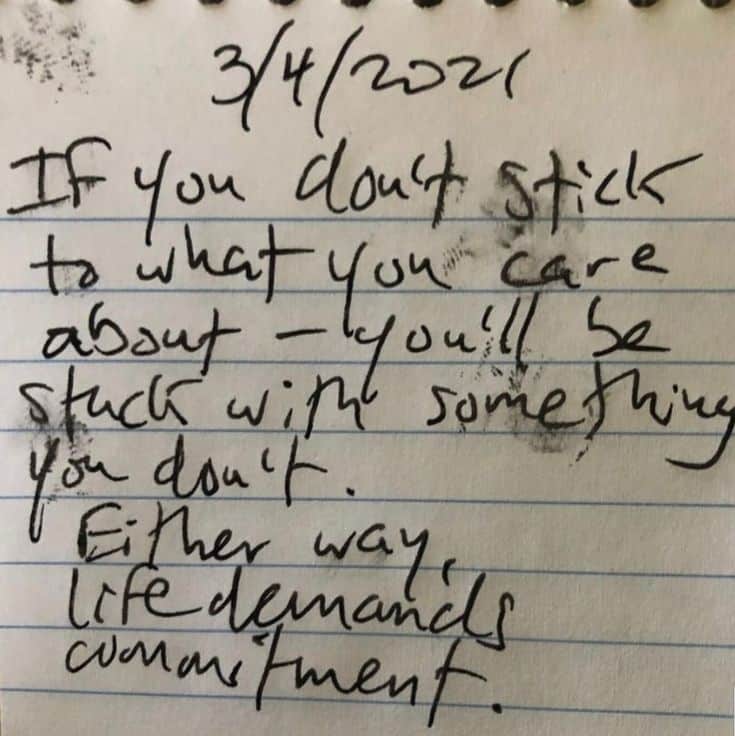
“Fast drivers can see no further than slow drivers, but they must look further down the road to time their reactions safely. Similarly, people with great projects afoot habitually look further and more clearly into the future than people who are mired in day-to-day concerns. these former control the future because by necessity they must project themselves into it; and the upshot is that, like ambitious settlers, they stake out larger plots and homesteads of time than the rest of us. They do not easily grow sad or old; they are seldom intimidated by the alarms and confusions of the present because they have something greater of their own, some sense of their large and coherent motion in time, to compare the present with.”
Robert Grudin, Time And The Art Of Living (Page 2)
Time And The Art Of Living [Book]

Book Overview: This is a book about time–about one’s own journey through it and, more important, about enlarging the pleasure one takes in that journey. It’s about memory of the past, hope and fear for the future, and how they color, for better and for worse, one’s experience of the present. Ultimately, it’s a book about freedom–freedom from despair of the clock, of the aging body, of the seeming waste of one’s daily routine, the freedom that comes with acceptance and appreciation of the human dimensions of time and of the place of each passing moment on life’s bounteous continuum. For Robert Grudin, living is an art, and cultivating a creative partnership with time is one of the keys to mastering it. In a series of wise, witty, and playful meditations, he suggests that happiness lies not in the effort to conquer time but rather in learning “to bend to its curve,” in hearing its music and learning to dance to it. Grudin offers practical advice and mental exercises designed to help the reader use time more effectively, but this is no ordinary self-help book. It is instead a kind of wisdom literature, a guide to life, a feast for the mind and for the spirit.