Archives
“Be present to it all: Welcome it and be with all the feels. Don’t make the situation or yourself wrong. Without resistance to what it is, you’ll feel more in your power. Being present in the moment also helps reduce anxiety about the future. Engage in activities that help you stay grounded, such as meditation, exercise, or spending time in nature.”
Nat Couropmitree | Read Matt’s Blog on this Quote ↗
“Life can only be lived dangerously—there is no other way to live it. It is only through danger that life attains maturity, growth. One needs to be an adventurer, always ready to risk the known for the unknown. That’s what being a seeker is all about. But once one has tasted the joys of freedom and fearlessness, one never repents because then one knows what it means to live at the optimum. Then one knows what it means to burn your life’s torch from both ends together. And even a single moment of that intensity is more gratifying than a whole eternity of mediocre living.”
Osho, Everyday Osho (Page 310)
“The principal enemy of mindfulness—or of any meditative practice—is our deeply conditioned habit of being distracted by thoughts. The problem is not thoughts themselves but the state of thinking without knowing that we are thinking. In fact, thoughts of all kinds can be perfectly good objects of mindfulness. In the early stages of one’s practice, however, the arising of thought will be more or less synonymous with distraction—that is, with a failure to meditate. Most people who believe they are meditating are merely thinking with their eyes closed. By practicing mindfulness, however, one can awaken from the dream of discursive thought and begin to see each arising image, idea, or bit of language vanish without a tract. What remains is consciousness itself, with its attendant sights, sounds, sensations, and thoughts appearing and changing in every moment.”
Sam Harris, Waking Up (Page 36)

“There is nothing passive about mindfulness. One might even say that it expresses a specific kind of passion—a passion for discerning what is subjectively real in every moment. It is a mode of cognition that is, above all, undistracted, accepting, and (ultimately) nonconceptual. Being mindful is not a matter of thinking more clearly about experience; it is the act of experiencing more clearly, including the arising of thoughts themselves. Mindfulness is a vivid awareness of whatever is appearing in one’s mind or body—thoughts, sensations, moods—without grasping at the pleasant or recoiling from the unpleasant. One of the great strengths of this technique of meditation, from a secular point of view, is that it does not require us to adopt any cultural affectations or unjustified beliefs. It simply demands that we pay close attention to the flow of experience in each moment.”
Sam Harris, Waking Up (Page 36)

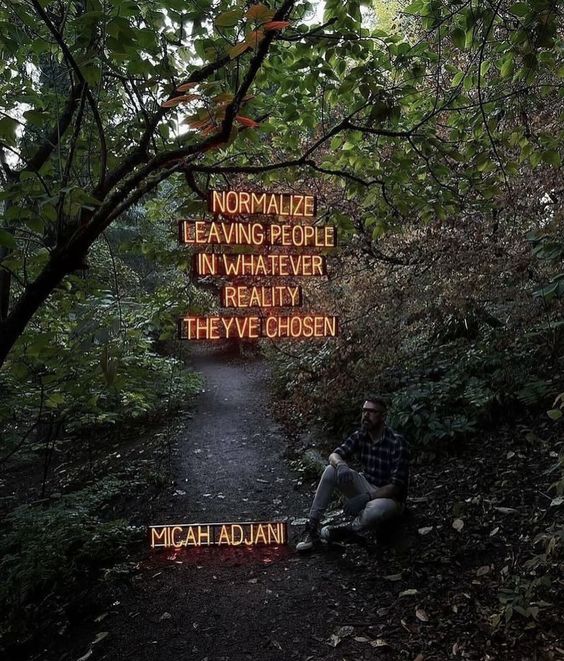
“One of the most satisfying feelings I know — and also one of the most growth-promoting experiences for the other person — comes from my appreciating this individual in the same way that I appreciate a sunset. People are just as wonderful as sunsets if I can let them be. In fact, perhaps the reason we can truly appreciate a sunset is that we cannot control it. When I look at a sunset as I did the other evening, I don’t find myself saying, ‘Soften the orange a little on the right hand corner, and put a bit more purple along the base, and use a little more pink in the cloud color.’ I don’t do that. I don’t try to control a sunset. I watch it with awe as it unfolds. I like myself best when I can appreciate my staff member, my son, my daughter, my grandchildren, in this same way.”
Carl Rogers
“The literature on [the] psychological benefits [of mindfulness] is now substantial. There is nothing spooky about mindfulness. It is simply the state of clear, nonjudgmental, and undistracted attention to the contents of consciousness, whether pleasant or unpleasant. Cultivating this quality of mind has been shown to reduce pain, anxiety, and depression; improve cognitive function; and even produce changes in gray matter density in regions of the brain related to learning and memory, emotional regulation, and self-awareness.”
Sam Harris, Waking Up (Page 35)
“The reality of your life is always now. And to realize this is liberating. In fact, I think there is nothing more important to understand if you want to be happy in this world.”
Sam Harris, Waking Up (Page 34)

“As long as there is love, there will be grief. The grief of time passing, of life moving on half-finished, of empty spaces that were once bursting with the laughter and energy of people we loved. As long as there is love there will be grief because grief is love’s natural continuation. It shows up in the aisles of stores we once frequented, in the half-finished bottle of wine we pour out, in the whiff of cologne we get two years after they’ve been gone. Grief is a giant neon sign, protruding through everything, pointing everywhere, broadcasting loudly, ‘Love was here.’ In the finer print, quietly, ‘Love still is.'”
Heidi Priebe
“Inspiration comes on the twenty-fifth attempt, not the first. If you want to make something excellent, don’t wait for a brilliant idea to strike. Create twenty-five of what you need and one will be great. Inspiration reveals itself after you get the average ideas out of the way, not before you take the first step.”
James Clear
The 10 Rules of Ikigai (for a Longer and Happier Life) + 6 Bonus Quotes from The Book
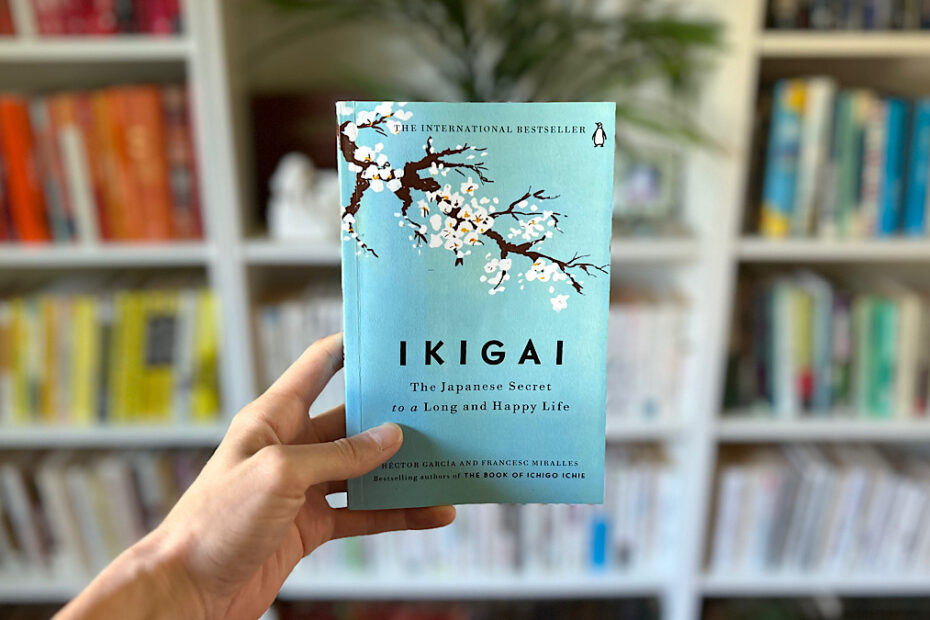
Excerpt: What is Ikigai? Often translated as “a reason for being,” it’s a concept that—when fully understood—can add years and joy to your life…
Read More »The 10 Rules of Ikigai (for a Longer and Happier Life) + 6 Bonus Quotes from The Book