Louise Hay Quote on Problems and How They Fix Themselves When We Fix Our Thinking
“I don’t fix problems, I fix my thinking. Then problems fix themselves.”
Louise Hay
Beyond the Quote (337/365)
Life isn’t easy—for any of us. I think we all can agree on that. If so, it can be assumed that life is hard—for all of us. Now, we can never know for sure how “hard” life is or isn’t for another person. We can only ever judge another person’s life from the outside looking in, which is an INCREDIBLY limited and superficial perspective. Of course, if someone is homeless or without basic necessities for survival, there are assumptions of “hard” that we can validly make. But, when it comes to judging the other people around us, how a person’s life appears to be and how their life actually is should never be assumed to be the same thing.
Read More »Louise Hay Quote on Problems and How They Fix Themselves When We Fix Our ThinkingChoose Your Hard
“Marriage is hard. Divorce is hard. Choose your hard.
Unknown
Obesity is hard. Being fit is hard. Choose your hard.
Being in debt is hard. Being financially disciplined is hard. Choose your hard.
Communication is hard. Not communicating is hard. Choose your hard.
Life will never be easy. It will always be hard. But we can choose our hard. Pick wisely.”
Beyond the Quote (336/365)
We’re wired to follow the path of least resistance. But, choosing to do what’s easy now doesn’t last. In fact, in almost every case, it only makes life harder later. It’s the principle of delayed gratification (more on this below).
So, while life can be easier from choosing the easier options, the truth is, it’s only a temporary easier. Experiencing the “hard” in life is not a matter of if, but a matter of when. And take heed, hard now and hard later are not created equal.
Read More »Choose Your HardVironika Tugaleva Quote on Conflict and How It Can Lead To the Most Profound Personal Growth
“The most profound personal growth does not happen while reading a book or meditating on a mat. It happens in the throes of conflict—when you are angry, afraid, frustrated. It happens when you are doing the same old thing and you suddenly realize that you have a choice.”
Vironika Tugaleva
Beyond the Quote (335/365)
Whenever you find yourself angry, frustrated, upset, or otherwise losing your cool, it helps to ask yourself: What state of mind is going to help me get through this in the most ideal way? I know, I know. Who is going to seriously ask themselves that question when they’re pissed off? It’s almost comical to think about someone who is about to blow their gasket—pausing—and asking themselves, “What state of mind is going to help me get through this in the most ideal way?” But, as comical as it sounds, within the framework of that question is a profound personal growth opportunity.
Read More »Vironika Tugaleva Quote on Conflict and How It Can Lead To the Most Profound Personal GrowthJ. Keith Murnighan Quote on Leadership and The Importance of Thinking Before Acting
“Leadership Law: Think of the reaction that you want first, then determine the actions you can take to maximize the chances that those reactions will actually happen.”
J. Keith Murnighan, Do Nothing!
Beyond the Quote (334/365)
When working with others, this type of premeditative thinking is foundational for influencing the performance you desire. It’s reverse engineering for leadership. Rather than react the way you feel and hope it influences the behavior change you desire after-the-fact, you flip that thought process on its head and think about how you want the other person to react and engineer the best actions you can take to get them there. It’s thinking then acting rather than acting then thinking—which is almost always a better idea.
Read More »J. Keith Murnighan Quote on Leadership and The Importance of Thinking Before ActingColin Wright Quote on Possessions and How They Possess Us If We’re Not Careful
“Our possessions possess us. All the things I owned kept the back of my mind activated. I used to sit around and feel weighted down by all the stuff in my life. I’d worry about everything I had, thinking ‘I’ve got this much, so now I need more – I need to level it out: I have the TV, so I need the DVD player; I have the garage, so I need a nice car to fill it; I have this, so I need that.’ It’s a never-ending cycle, a cold war with yourself.”
Colin Wright, via Everything That Remains
Beyond the Quote (333/365)
You know that feeling you get when you’re too excited to focus on anything else except for the thing that you’re excited about? Yeah, that was me a few days ago as I rushed home to unbox the new phone that had finally been delivered. I knew that I had responsibilities that needed responding to, but I decided to let the excitement sweep me away instead. Or maybe it just swept me away and I like to pretend that I “let” it. None-the-less, right as I was unboxing my new phone and getting everything set up, lo and behold, what happens next? My computer breaks down.
Read More »Colin Wright Quote on Possessions and How They Possess Us If We’re Not Careful“Everything is interconnected. Gratitude improves sleep. Sleep reduces pain. Reduced pain improves your mood. Improved mood reduces anxiety, which improves focus and planning. Focus and planning help with decision making. Decision making further reduces anxiety and improves enjoyment. Enjoyment gives you more to be grateful for, which keeps that loop of the upward spiral going. Enjoyment also makes it more likely you’ll exercise and be social, which, in turn, will make you happier.”
Daniel J. Siegel, The Upward Spiral
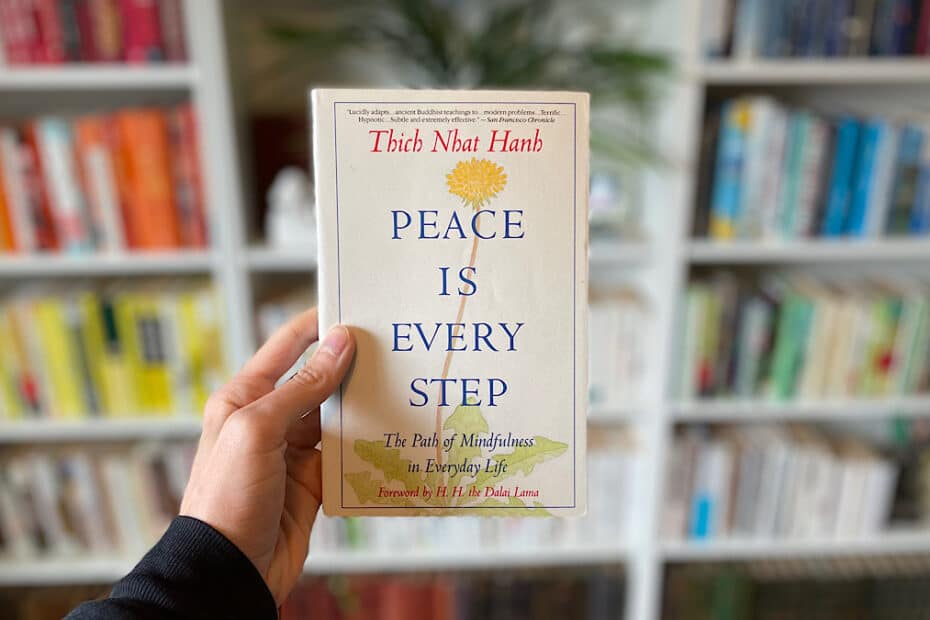
20 Profound Thich Nhat Hanh Quotes from Peace Is Every Step
Excerpt: In the rush of life, we tend to lose touch with the peace that is available in each moment. These quotes from Peace Is Every Step will help…
Read More »20 Profound Thich Nhat Hanh Quotes from Peace Is Every Step
Osho Quote on Living With Courage and Exploring Both the Inner and Outer World
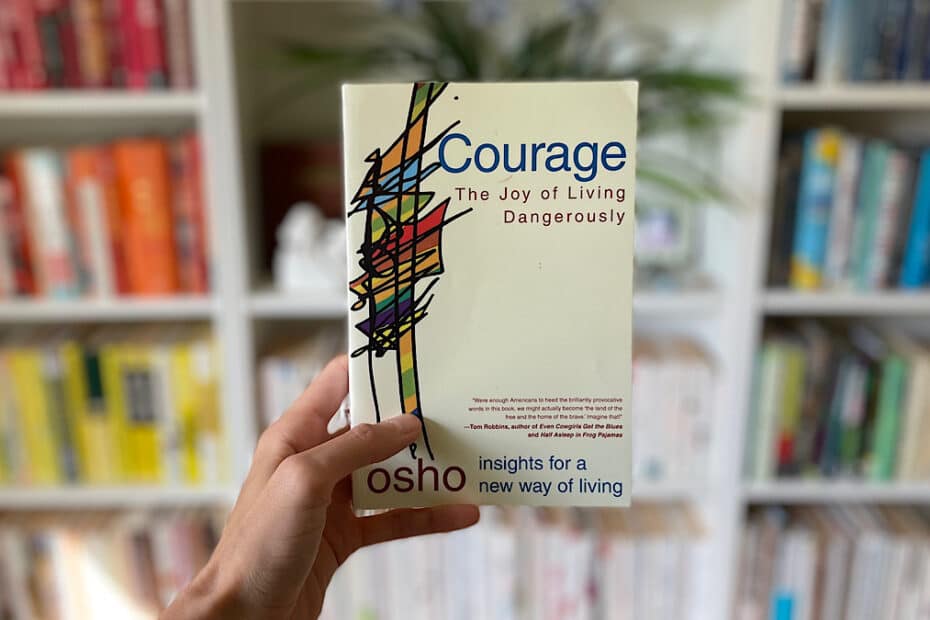
“Those who are courageous, they go headlong. They search all opportunities of danger. Their life philosophy is not that of insurance companies. Their life philosophy is that of a mountain climber, a glider, a surfer. And not only in the outside seas they surf; they surf in their innermost seas. And not only on the outside they climb Alps and Himalayas; they seek inner peaks.”
Osho, Courage (Page 119)
Beyond the Quote (330/365)
What’s most interesting to me is how deeply connected both types of adventuring are. It is very similar to the connection between breathing in and breathing out. Adventuring on the outside is the expansion of the lungs—it is the breathing in of all that the world has to offer. Adventuring on the inside is the contraction of the lungs—it is the breathing out of all that you have inhaled and synthesized from your experiences. One leads to the other and the other leads to more of the one.
Read More »Osho Quote on Living With Courage and Exploring Both the Inner and Outer World“So much has been given to you. Do you deserve it? Have you earned it? Existence goes on pouring so much over you that to ask for more is just ugly. That which you have received, you should be grateful for it. And the most beautiful thing is that when you are grateful, more and more existence starts pouring over you. It becomes a circle: the more you get, the more you become grateful; the more you become grateful, the more you get… and there is no need to end it, it is an infinite process.”
Osho, Courage (Page 190)
“Once you have heard a truth it is impossible to forget it. That is one of the qualities of truth, that you don’t need to remember it. The lie has to be remembered continually; you may forget. The person habituated to lies needs a better memory than the person who is habituated to truth, because a true person has no need of memory. If you say only the truth there is no need to remember. But if you are saying a lie, then you have to continually remember because you have said one lie to one person, another lie to another person, something else to somebody else.”
Osho, Courage (Page 186)
An Insightful Short Story About Spilling Coffee — What’s In YOUR Cup?
Excerpt: This short story about spilling coffee shares a powerful analogy that can help you better understand your temperament (and reactions) in life.
Read More »An Insightful Short Story About Spilling Coffee — What’s In YOUR Cup?