
“I keep to [my] routine every day without variation. The repetition itself becomes the important thing; it’s a form of mesmerism. I mesmerize myself to reach a deeper state of mind.”
Haruki Murakami, via Daily Rituals (Page 60) | Read Matt’s Blog on this quote ➜
Archives
“You can’t steer a stationary ship.”
Nicolas Cole | Read Matt’s Blog on this quote ➜
“[René] Descartes believed that idleness was essential to good mental work, and he made sure not to overexert himself.
Mason Currey, Daily Rituals (Page 151)
“My life has been my music, it’s always come first, but the music ain’t worth nothing if you can’t lay it on the public.”
Louis Armstrong, via Daily Rituals (Page 114) (Read Matt’s Blog On This Quote)
“Circumstances are incapable of considering or caring for your feelings, your anxiety, or your excitement. They don’t care about your reaction. They are not people. So stop acting like getting worked up is having an impact on a given situation. Situations don’t care at all.”
Ryan Holiday, The Daily Stoic (Page 63)
“I don’t believe in draining the reservoir, do you see? I believe in getting up from the typewriter, away from it, while I still have things to say.”
Henry Miller, via Daily Rituals (Page 53) | Read Matt’s Blog on this quote ➜
“I’ve realized that somebody who’s tired and needs a rest, and goes on working all the same is a fool.”
Carl Jung, via Daily Rituals (Page 41)
“A modern stoic knows that the surest way to discipline passion is to discipline time: decide what you want or ought to do during the day, then always do it at exactly the same moment every day, and passion will give you no trouble.”
W. H. Auden, via Daily Rituals (Page 3)
“Each phenomenon on earth is an allegory, and each allegory is an open gate through which the soul, if it is ready, can pass into the interior of the world where you and I and day and night are all one. In the course of his life, every human being comes upon that open gate, here or there along the way; everyone is sometimes assailed by the thought that everything visible is an allegory and that behind the allegory live spirit and eternal life. Few, to be sure, pass through the gate and give up the beautiful illusion for the surmised reality of what lies within.”
Hermann Hesse, Strange News From Another Star, via Sunbeams (Page 42)
24 Russell Brand Quotes from Recovery: Freedom From Our Addictions
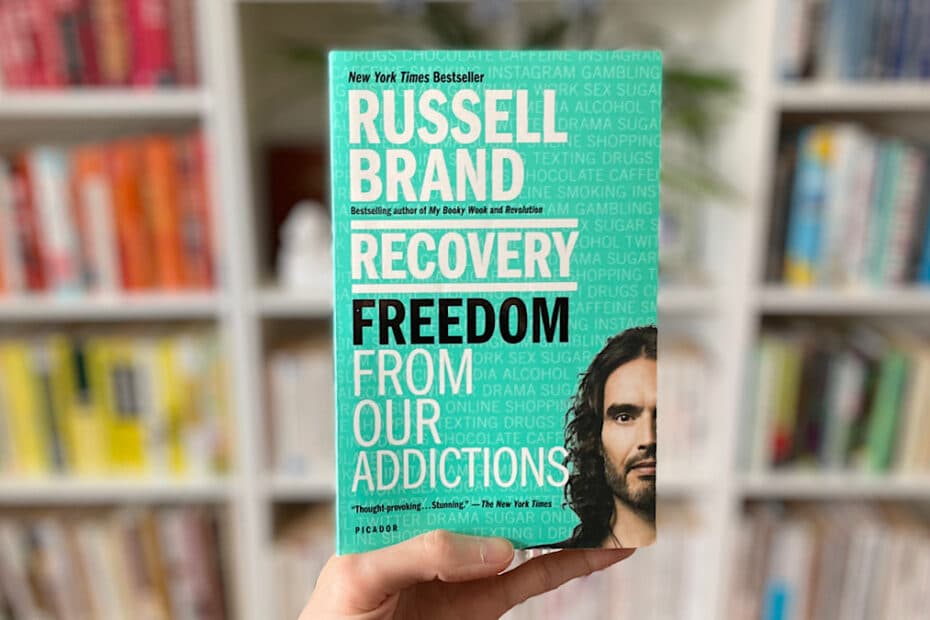
Excerpt: This collection of Russell Brand Quotes from Recovery isn’t just for ‘addicts’—it’s for anyone with addictive tendencies… it’s for us all.
Read More »24 Russell Brand Quotes from Recovery: Freedom From Our Addictions
“The human condition is such that pain and effort are not just symptoms which can be removed without changing life itself; they are rather the modes in which life itself, together with the necessity to which it is bound, makes itself felt. For mortals, the ‘easy life of the gods’ would be a lifeless life.”
Hannah Arendt, Sunbeams (Page 41)
To want nothing makes one invincible—because nothing lies outside your control. This doesn’t just go for not wanting the easy-to-criticize things like wealth or fame—the kinds of folly that we see illustrated in some of our most classic plays and fables. That green light that Gatsby strove for can represent seemingly good things too, like love or a noble cause. But it can wreck someone all the same.”
Ryan Holiday, The Daily Stoic (Page 61)
“What we desire makes us vulnerable. Whether it’s an opportunity to travel the world or to be the president or for five minutes of peace and quiet, when we pine for something, when we hope against hope, we set ourselves up for disappointment. Because fate can always intervene and then we’ll likely lose our self-control in response.”
Ryan Holiday, The Daily Stoic (Page 61)
“Human beings exist as individuals and as members of groups at all times. I am one and I am one of many… always. This also creates some inherent conflicts of interest. When we make decisions, we must weigh the benefits to us personally against the benefits to our tribe or collective. Quite often, what’s good for one is not necessarily good for the other. Working exclusively to advance ourselves may hurt the group, while working exclusively to advance the group may come at a cost to us as individuals.”
Simon Sinek, Leaders Eat Last
“Have you ever sat very quietly without any movement? You try it, sit really still, with your back straight, and observe what your mind is doing. Don’t try to control it, don’t say it should not jump from one thought to another, but just be aware of how your mind is jumping. Don’t do anything about it, but watch it as from the banks of a river you watch the river flow by. In the flowing river there are so many things—fishes, leaves, dead animals—but it is always living, moving, and your mind is like that. It is everlastingly restless, flitting from one thing to another like a butterfly… just watch your mind. It is great fun. If you try it as fun, as an amusing thing, you will find that the mind begins to settle down without any effort on your part to control it. There is then no censor, no judge, no evaluator; and when the mind is thus very quiet of itself, spontaneously still, you will discover what it is to be gay. Do you know what gaiety is? It is just to laugh, to take delight in anything or nothing, to know the joy of living, smiling, looking straight into the face of another without any sense of fear.”
J. Krishnamurti, Think On These Things, via Sunbeams (Page 41)