
“Alone, she’d been scared, but that was already humming as excitement. There was something else, too. The calmness of the boy. She’d never known anybody to speak or move so steady. So sure and easy. Just being near him, and not even that close, had eased her tightness. For the first time since Ma and Jodie left, she breathed without pain; felt something other than the hurt.”
Delia Owens, Where The Crawdads Sing (Page 46)
Archives
“When in trouble, just let go. Go back to idle.”
Delia Owens, Where The Crawdads Sing (Page 41) | Read Matt’s Blog on this quote ➜
“When you’ve done well and another has benefited by it, why like a fool do you look for a third thing on top—credit for the good deed or a favor in return?”
Marcus Aurelius, Meditations, via The Daily Stoic (Page 212)
“Great teachers are usually hardest on their most promising students. When teachers see potential, they want it to be fully realized. But great teachers are also aware that natural ability and quick comprehension can be quite dangerous to the student if left alone. Early promise can lead to overconfidence and create bad habits. Those who pick things up quickly are notorious for skipping the basic lessons and ignoring the fundamentals. Don’t get carried away. Take it slow. Train with humility.”
Ryan Holiday, The Daily Stoic (Page 211)
Where The Crawdads Sing [Book]
![Where The Crawdads Sing by Delia Owens [Book]](https://movemequotes.com/wp-content/uploads/2021/07/Crawdads.jpeg)
Book Overview: For years, rumors of the “Marsh Girl” have haunted Barkley Cove, a quiet town on the North Carolina coast. So in late 1969, when handsome Chase Andrews is found dead, the locals immediately suspect Kya Clark, the so-called Marsh Girl. But Kya is not what they say. Sensitive and intelligent, she has survived for years alone in the marsh that she calls home, finding friends in the gulls and lessons in the sand. Then the time comes when she yearns to be touched and loved. When two young men from town become intrigued by her wild beauty, Kya opens herself to a new life–until the unthinkable happens. Where the Crawdads Sing is at once an exquisite ode to the natural world, a heartbreaking coming-of-age story, and a surprising tale of possible murder. Owens reminds us that we are forever shaped by the children we once were, and that we are all subject to the beautiful and violent secrets that nature keeps.
Post(s) Inspired by this Book:
“One person, on doing well by others, immediately accounts the expected favor in return. Another is not so quick, but still considers the person a debtor and knows the favor. A third kind of person acts as if no conscious of the deed, rather like a vine producing a cluster of grapes without making further demands, like a horse after its race, or a dog after its walk, or a bee after making its honey. Such a person, having done a good deed, won’t go shouting from rooftops but simply moves on to the next deed just like the vine produces another bunch of grapes in the right season.”
Marcus Aurelius, Meditations, via The Daily Stoic (Page 210)
“In your actions, don’t procrastinate. In your conversations, don’t confuse. In your thoughts, don’t wander. In your soul, don’t be passive or aggressive. In your life, don’t be all about business.”
Marcus Aurelius, Meditations, via The Daily Stoic (Page 209)
“Whatever humble art you practice: Are you sure you’re making time for it? Are you loving what you do enough to make the time? Can you trust that if you put in the effort, the rest will take care of itself? Because it will. Love the craft, be the craftsman.”
Ryan Holiday, The Daily Stoic (Page 207)




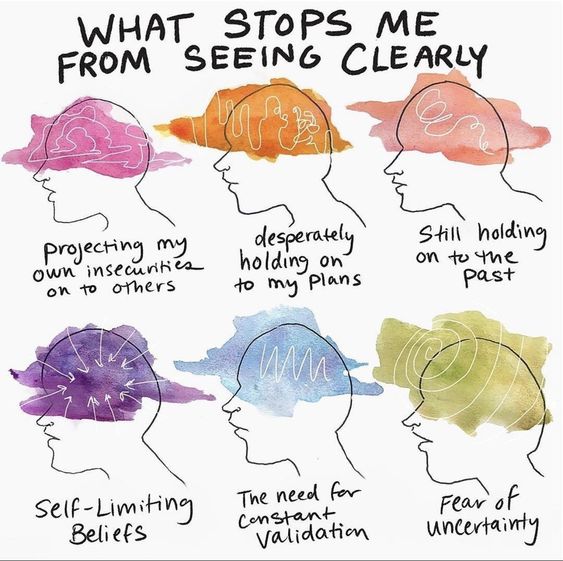
Dustin Poirier Quote on Karma Explained

“Karma’s not a b*tch, she’s a mirror.”
Dustin Poirier
When what goes around finally comes back around, what arrives can certainly be painful. Life is painful. And many times, what we send out into the world is pain. Pain that comes from personal experience and pain that’s sent by the people we’ve caused pain to. Maybe not intentionally, but because we’re imperfect, suffering creatures who are doing the best we can with what we’ve been given in life. And many times, what we’ve been given is more pain than we’ve learned how to properly manage.
Read More »Dustin Poirier Quote on Karma Explained“Our lives are also fed by kind words and gracious behavior. We are nourished by expressions like ‘excuse me,’ and other such simple courtesies. Our spirits are also richly fed on compliments and praise, nourished by consideration as well as whole wheat bread. Rudeness, the absence of the sacrament of consideration, is but another mark that our time-is-money society is lacking in spirituality, if not also in its enjoyment of life.”
Ed Hays, via Sunbeams (Page 119)