
“Parkinson’s has made me aware of time. Like, really aware of it. My sense of mission, my sense of this is what I’m supposed to do, that got much stronger in me. If I don’t do that, I start to think about, ‘Oh, shit, this happened to me. What a drag.’ You know, it makes life harder. Then you go into this whole pity party thing. It’s a complete waste of time.”
Phil Stutz, Stutz
Archives



“The average person wants to get paid back. They want everything to be fair. They want everything to be balanced. But you’re not gonna get it from them. The way you feel you’re getting paid, the way you feel things are being rebalanced, is to get your satisfaction from the exercise [forgiveness/ letting go/ love] itself. That’s called Active Love.”
Phil Stutz, Stutz
“We think that perfecting the outward version of ourselves that the world sees will bring us the inner peace we want. But Socrates and the Stoics knew it was the other way around. It’s the inner work that is more likely to bring us the outward success. And more importantly, that the inner work was an end unto itself.”
Ryan Holiday, Daily Stoic Blog


“Before I met you, I’m this, like, wildly insecure kid, and I think success and awards will absolve me of the pain of life. So I work so hard to get to that Snapshot, and because of my privilege and luck, I got to go into that Snapshot relatively early, and when it didn’t cure any of that stuff, it made me beyond depressed.”
Jonah Hill, Stutz
“There are three aspects of reality: the pain will never go away; uncertainty will never go away; and there’s no getting away from the need for constant work. Everybody has to live like that, no matter what.”
Phil Stutz, Stutz
Meditations [Book]
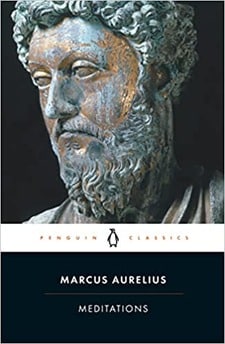
Book Overview: Written in Greek by an intellectual Roman emperor without any intention of publication, the Meditations of Marcus Aurelius offer a wide range of fascinating spiritual reflections and exercises developed as the leader struggled to understand himself and make sense of the universe. Spanning from doubt and despair to conviction and exaltation, they cover such diverse topics as the question of virtue, human rationality, the nature of the gods and the values of leadership. But while the Meditations were composed to provide personal consolation, in developing his beliefs Marcus also created one of the greatest of all works of philosophy: a series of wise and practical aphorisms that have been consulted and admired by statesmen, thinkers and ordinary readers for almost two thousand years.



Feeling Lost? Phil Stutz Says Don’t Try To Figure It Out. Here’s Why…

Excerpt: “If you’re lost, don’t try to figure it out—activate your life force instead.” What’s life force? Let Stutz—Jonah Hill’s therapist—explain…
Read More »Feeling Lost? Phil Stutz Says Don’t Try To Figure It Out. Here’s Why…
“True confidence is living in uncertainty.”
Phil Stutz, Stutz
“Premeditation of death is premeditation of freedom… He who has learned how to die has unlearned how to be a slave. Knowing how to die frees us from all subjection and constraint.”
Michel De Montaigne, via The Daily Laws (Page 453)