


“It’s sharing our own personal pain that allows us to move beyond it. Because it’s one thing to just sit and intellectualize our problems to ourselves. But once we share and mold that meaning out in the world around us, our pain becomes something outside of us. And because it’s now outside of us, we are finally able to live without it.”
Mark Manson, Blog
“All those inspirational quotes with cheesy sunsets about enduring adversity and “what doesn’t kill you makes you stronger,” they all kind of mislead you into thinking that just enduring some form of hardship is enough to steel yourself against future hardship. That’s not entirely true. It’s what comes after the trauma that really matters. It’s not the survival of trauma that makes you stronger, it’s the work you put in as a result of the trauma that makes you stronger.”
Mark Manson, Blog
“Life is hard and sometimes there is little you can do to affect the outcome of your day. In battle soldiers die, families grieve, your days are long and filled with anxious moments. You search for something that can give you solace, that can motivate you to begin your day, that can be a sense of pride in an oftentimes ugly world. But it is not just combat. It is daily life that needs this same sense of structure. Nothing can replace the strength and comfort of one’s faith, but sometimes the simple act of making your bed can give you the lift you need to start your day and provide you the satisfaction to end it right.”
William A. McRaven, Make Your Bed (Page 9) | ★ Featured on this book list.

Make Your Bed [Book]
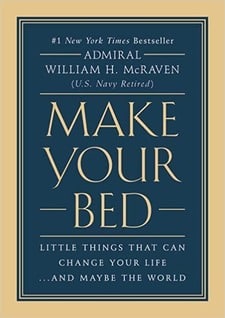
Book Overview: If you want to change the world, start off by making your bed. On May 17, 2014, Admiral William H. McRaven addressed the graduating class of the University of Texas at Austin on their Commencement day. Taking inspiration from the university’s slogan, “What starts here changes the world,” he shared the ten principles he learned during Navy Seal training that helped him overcome challenges not only in his training and long Naval career, but also throughout his life; and he explained how anyone can use these basic lessons to change themselves—and the world—for the better.
Post(s) Inspired by this Book:
12 William McRaven Quotes from Make Your Bed That’ll Change Your World